Is your luxury car starting to feel more like a desert dune buggy than a precision-engineered machine? In the intense heat and high-speed environment of the UAE, worn shock absorbers Dubai drivers often overlook can quickly turn a premium commute into a safety hazard. You might notice a subtle bounce after a speed bump or a slight nose-dive when braking at a red light. These aren’t just minor comfort issues. They’re critical warnings that your vehicle’s stability and braking distance are no longer at factory standards.
It’s frustrating when the smooth, silent ride you expect from a high-end brand begins to deteriorate. You want to maintain that signature handling while ensuring you don’t face a surprise failure during your next RTA technical test. This guide will help you identify exactly when your suspension needs professional attention and explain how the local climate impacts components like air springs and struts. We’ll explore the 2026 trends for replacement intervals, which typically fall between 80,000 and 120,000 kilometers, and give you the knowledge to choose the best solution for your car’s safety and performance.
Key Takeaways
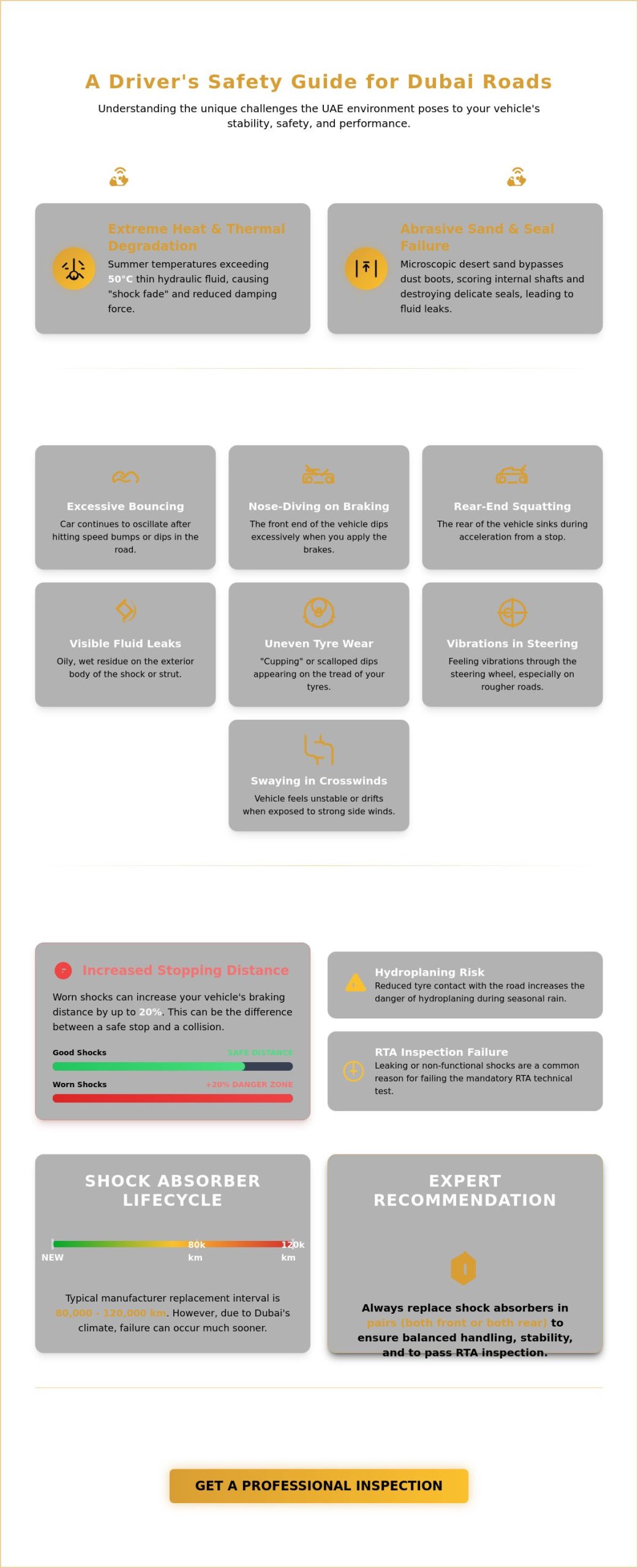
- Learn how Dubai’s extreme 50°C+ summer temperatures degrade hydraulic fluid and compromise your vehicle’s handling.
- Identify seven critical symptoms of worn shock absorbers Dubai motorists face, including excessive bouncing and front-end dipping on high-speed roads.
- Understand the hidden safety risks, such as a 20% increase in stopping distance and a higher danger of hydroplaning during seasonal storms.
- Discover why replacing shocks in pairs is essential for maintaining balanced handling and passing the RTA technical inspection.
- Determine whether your luxury vehicle uses serviceable or sealed units to make an informed decision between repair and replacement.
Understanding the Lifecycle of Shock Absorbers in the UAE
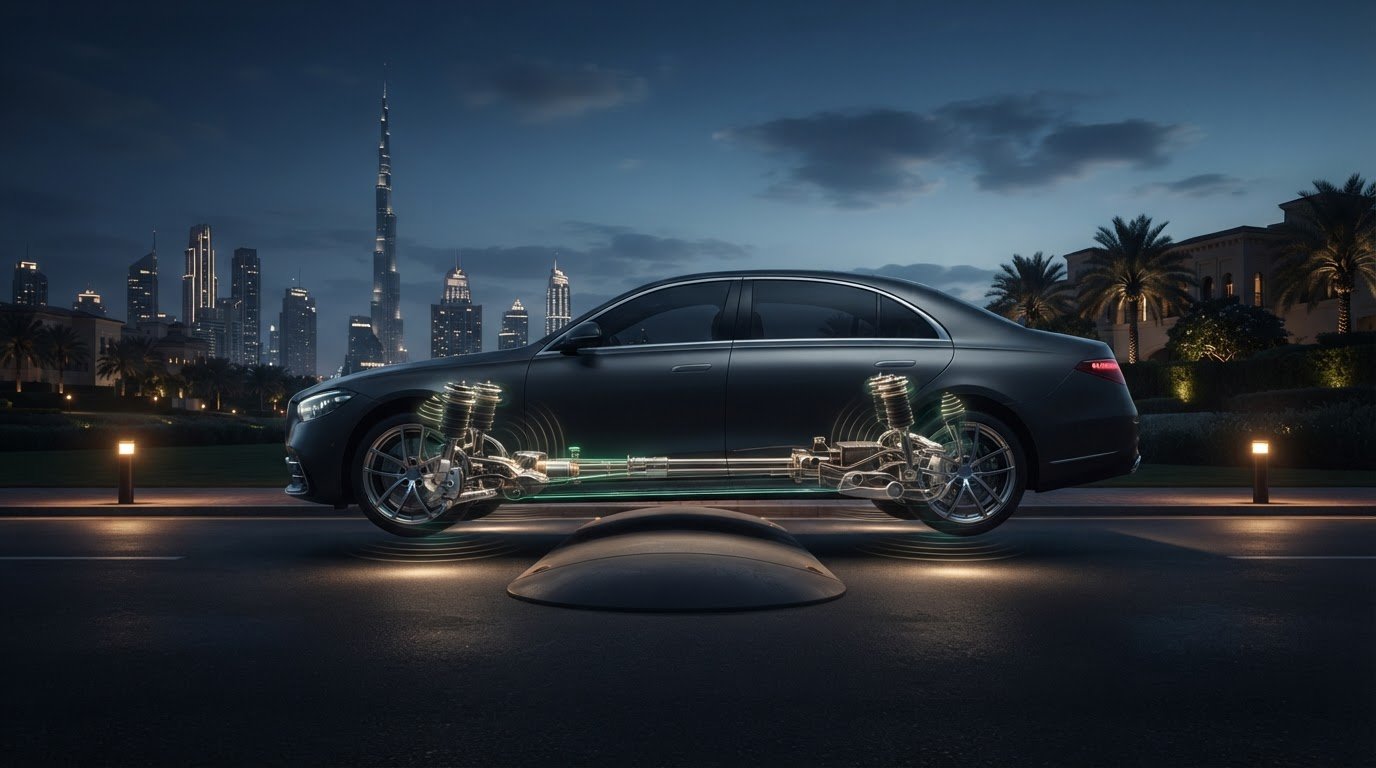
A shock absorber is more than just a part of your car’s suspension; it is a sophisticated hydraulic device designed to control the kinetic energy of your vehicle’s springs. To understand how shock absorbers work, you must view them as heat exchangers that convert motion into thermal energy. In the harsh environment of the UAE, this process is pushed to its absolute limit. While manufacturers often suggest a replacement interval of 80,000 to 120,000 kilometers, worn shock absorbers Dubai drivers experience often fail much sooner due to local stressors.
How does a typical Dubai summer affect your car’s handling? When ambient temperatures exceed 50°C, the internal hydraulic fluid undergoes a drastic change in viscosity. As the oil thins out, it loses its ability to provide consistent damping force. This leads to what specialists call “shock fade.” During a long commute on the E11, your car might feel stable at the start but become increasingly bouncy and difficult to control as the fluid overheats. This isn’t just about comfort; it’s about maintaining a safe contact patch between your tires and the asphalt.
Have you noticed the frequency of speed humps in residential districts like Jumeirah or Al Barsha? These traffic-calming measures are essential for safety, but they subject your suspension to repetitive, high-impact cycles. This constant compression and rebound cause “speed hump fatigue,” where the internal valving loses its precision over time. Even if you drive carefully, the sheer volume of these obstacles in Dubai means your suspension works harder here than in almost any other global city.
The Impact of Thermal Degradation
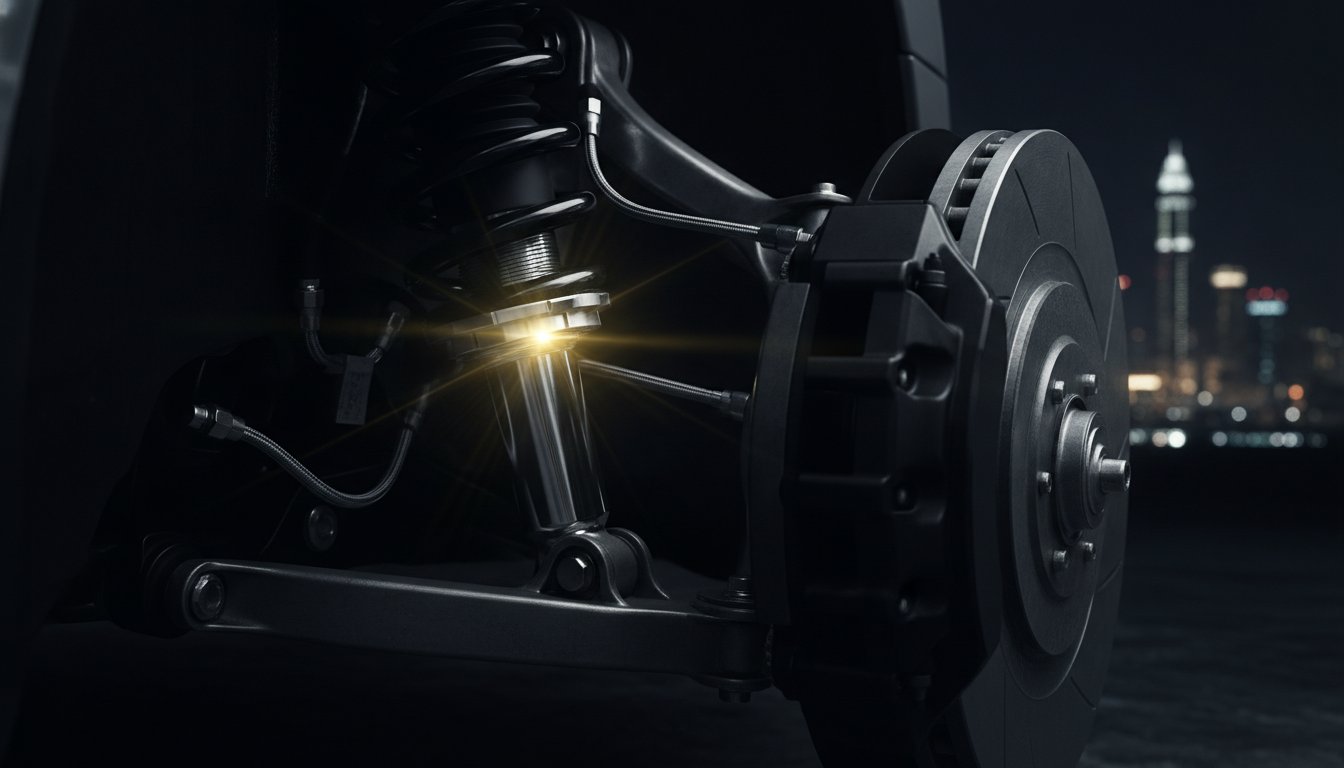
Extreme heat doesn’t just affect the oil; it attacks the structural integrity of the entire unit. The rubber seals responsible for keeping the hydraulic fluid pressurized are particularly vulnerable. Under relentless thermal stress, these seals begin to harden and eventually crack. Once a seal fails, the pressurized gas or oil escapes, rendering the component useless. Thermal oil breakdown in the UAE occurs when the hydraulic fluid’s chemical structure changes due to sustained high temperatures, resulting in a total loss of damping efficiency.
Sand Ingress and Seal Failure
Sand is the silent enemy of your vehicle’s undercarriage. Microscopic desert sand particles are incredibly abrasive. They manage to bypass even the most robust dust boots, settling on the polished piston rod. Every time the shock compresses, these particles act like sandpaper, scoring the internal shafts and tearing through the delicate seals. If you ignore the early signs of worn shock absorbers Dubai sand will continue to erode the internal components until the entire strut fails.
Luxury cars are especially susceptible to this damage. Many high-end models feature complex valving and electronic sensors that require a perfectly clean environment to function. Even minor seepage can quickly escalate into a major oil loss, leaving you with a sagging suspension and a failed RTA inspection. Identifying the transition from minor seepage to major oil loss is critical for avoiding expensive secondary damage to your tires and steering rack.
7 Critical Signs of Worn Shock Absorbers on Dubai Roads
Do you feel like your car has a mind of its own when you’re cruising through Downtown Dubai? Identifying worn shock absorbers Dubai drivers often encounter starts with paying close attention to how your vehicle reacts to the road surface. Because wear happens gradually, many owners don’t realize their safety is compromised until a near-miss occurs. If you notice any of these symptoms, your suspension is likely struggling to maintain control.
- Excessive Bouncing: If your car continues to oscillate more than once after hitting a speed hump in Al Barsha, your dampers are no longer controlling the spring energy.
- Nose-Diving: Does the front of your car dip sharply when you apply the brakes on Sheikh Zayed Road? This “nose-dive” reduces rear-wheel traction and increases stopping distances.
- Rear-End Squatting: You might feel the back of the car sink toward the asphalt during brisk acceleration from a stoplight.
- Fluid Leaks: Look for wet, oily residue on the exterior of the shock body. This is a clear sign that internal seals have failed.
- Tyre Cupping: Inspect your tread for “scalloped” or wavy wear patterns. This happens when the tyre literally bounces off the road while driving.
- Vibrating Steering: Excessive vibration through the wheel, especially at highway speeds, often points to internal valving issues.
- Body Roll: If the car leans heavily to the side when taking a curve or exit ramp, your stability is at risk.
Handling and Stability Red Flags
Have you ever experienced a “floating” sensation while changing lanes at 100 km/h? This lack of steering precision is a hallmark of a degraded vehicle’s suspension system. When shocks are worn, the car’s weight shifts unpredictably, which can confuse modern ABS and Electronic Stability Control (ESC) systems. These safety features rely on consistent wheel contact to function. If your car pulls to one side during braking, it’s often because the damping force is uneven across the axle.
Visual and Auditory Cues
Listen for unusual sounds. A metallic “knocking” or “clunking” when driving over uneven pavement usually suggests that a bushing has collapsed or the shock’s internal piston is bottoming out. While some drivers try the “bounce test” by pushing down on the hood, it’s often unreliable for modern luxury vehicles with complex electronic damping. Instead, look for torn dust boots or visible cracks in the rubber mounts. If you’re unsure about the state of your suspension, it’s best to book a professional inspection to avoid further damage to your tyres and steering components.
The Hidden Safety Risks of Driving with Worn Shocks in Dubai
Driving with worn shock absorbers Dubai roads often hide the danger until it’s too late. At low speeds, your car might feel manageable, but everything changes once you accelerate onto the highway. Did you know that worn shocks can increase your stopping distance by up to 20%? When your dampers are weak, they fail to keep the tyres firmly pressed against the pavement. This creates a minute bounce that prevents your brakes from gripping effectively, potentially turning a minor scare into a serious collision. This isn’t just a comfort issue; it’s a fundamental failure of your car’s safety net.
Dubai isn’t known for frequent rain, but when it pours, the flooding is often intense. Failing shocks significantly increase the risk of hydroplaning. Because the suspension can’t maintain constant tyre-to-road contact, your car is more likely to skim across the surface of the water rather than cutting through it. This loss of steering control is terrifying at any speed. Additionally, the excessive body roll caused by failing dampers makes emergency swerves much more dangerous. The vehicle’s weight shifts violently, which can lead to a total loss of control, especially in taller SUVs common in the UAE.
The damage doesn’t stop with safety risks. Neglecting worn shock absorbers Dubai heat and road conditions accelerate leads to a cascade of mechanical failures. Your tyres will develop uneven wear patterns, and your brake pads will wear out faster due to the increased load. By the time you notice the problem, you’re often looking at a much larger repair bill than just a simple shock replacement.
High-Speed Stability on UAE Highways
Maintaining stability at 120km/h on the E11 requires precision. When your dampers are degraded, you’ll experience tyre hop, where the wheels spend less time in contact with the road. This isn’t just a mechanical issue; it’s a mental one. You’ll find yourself constantly correcting the steering to keep the car straight against crosswinds or road undulations. This psychological fatigue is a hidden danger of long commutes. It reduces your reaction time and increases the likelihood of driver error during your daily drive.
The Impact on Luxury Car Systems
In premium vehicles, the suspension is a connected ecosystem. If your dampers fail to absorb impact, that energy is transferred directly to other sensitive parts. This often leads to accelerated Range Rover air suspension problems Dubai owners frequently face, as the air bags must compensate for the lack of damping. Similarly, German models with active chassis management rely on healthy shocks to feed accurate data to the onboard computers. Ignoring these issues can lead to a cascade of electronic errors, making specialized Audi suspension repair Dubai services essential for restoring the precision drive you expect.
Repair vs. Replacement: Making the Right Choice for Your Vehicle
When you’re dealing with worn shock absorbers Dubai heat has likely pushed to the breaking point, you’re faced with a critical decision. Should you attempt a repair or invest in a full replacement? Making the right choice is essential for both your wallet and your safety on the road. Most modern vehicles utilize “sealed” hydraulic units. These are factory-closed components designed to be replaced entirely once they fail. While you might find shops offering to “fix” them, these temporary solutions rarely last in the UAE’s harsh climate. In contrast, some high-end performance cars feature “serviceable” shocks that specialists can dismantle and rebuild. Knowing which type your car uses is the first step in a stress-free resolution.
Is it okay to replace just one shock? The short answer is no. You must always replace shock absorbers in pairs across the same axle. Think of it like buying a new pair of running shoes; you wouldn’t wear one brand-new sneaker and one worn-out one. Replacing only one side creates an imbalance in damping force. This leads to unpredictable handling, uneven tyre wear, and a car that pulls to one side during heavy braking. To maintain the balanced, premium handling your vehicle was designed for, always address the front or rear units together.
Before you commit to a full replacement, consider the supporting components. Often, the loud knocking sound you hear isn’t the shock itself, but a collapsed mounting plate or a perished rubber bushing. If the shock body is dry and the car passes a damping test, you might only need to replace these smaller parts. When choosing between OEM (Original Equipment Manufacturer) and aftermarket parts, use this checklist:
- Does the part offer specific heat-resistance ratings for Middle East climates?
- Will the component maintain the factory ride height and sensor compatibility?
- Is the manufacturer reputable for high-speed stability and durability?
When is Repair an Option?
Repair is typically reserved for specialized high-performance dampers. These units can sometimes undergo a process of re-gassing or re-sealing to restore their original pressure. However, for 90% of the cars on Dubai’s roads, standard shocks are “replace only” components. If you notice internal valving failure or significant oil leaks, replacement is the only safe path forward. Don’t let a minor seepage turn into a total suspension collapse; proactive replacement is always cheaper than emergency repairs.
The Importance of Professional Diagnostics
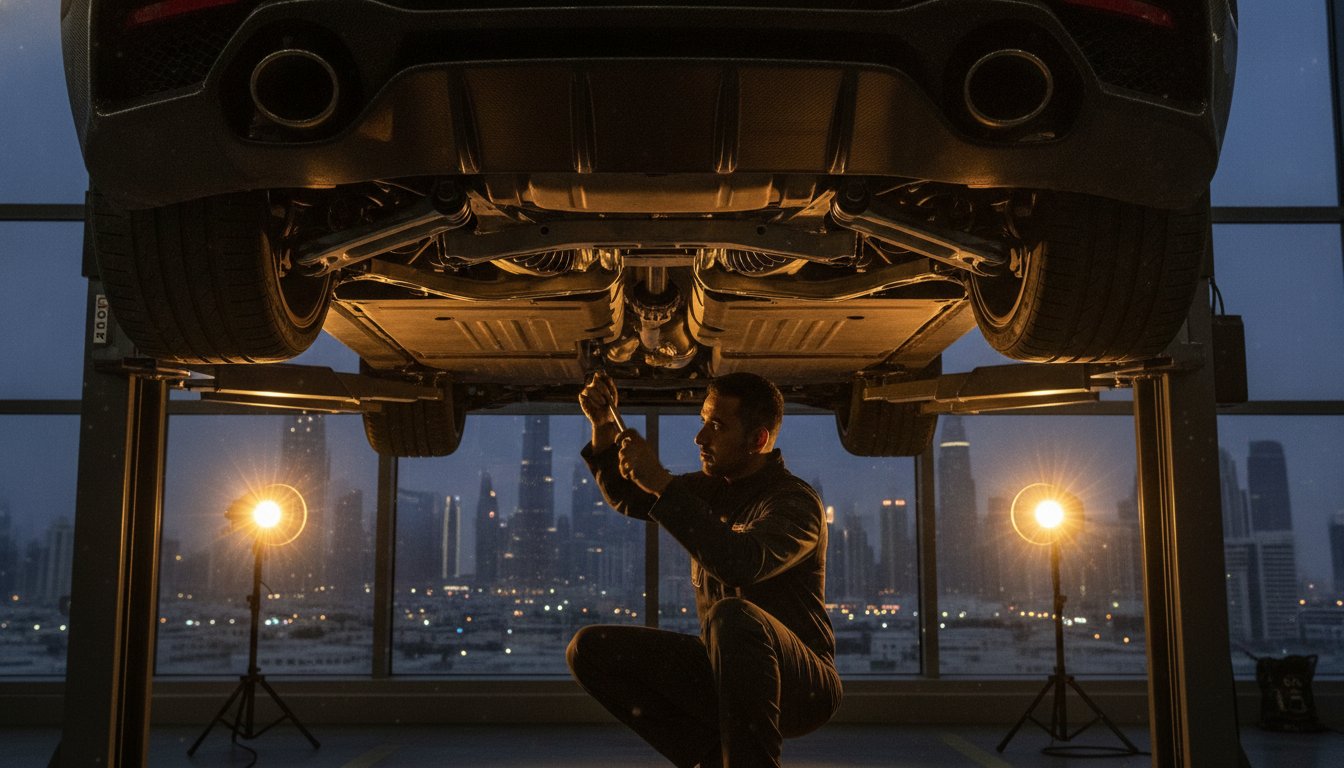
A quick visual inspection isn’t enough for a comprehensive car suspension repair Dubai service. Modern luxury vehicles require specialized equipment like suspension shaker plates and computer-aided diagnostic tools. These systems measure the exact percentage of damping efficiency remaining in each corner of the car. Once your new shocks are installed, a professional wheel alignment is mandatory. New components change the geometry of your suspension slightly, and even a tiny misalignment will quickly ruin your expensive tyres. Ready to restore your car’s factory handling? Schedule a professional suspension diagnostic with our specialist team today.
Specialist Shock Absorber Solutions at Suspension Repair Dubai
Why trust a generalist garage with the complex dynamics of your vehicle’s safety? At Suspension Repair Dubai, we don’t divide our attention between engine overhauls and oil changes. We focus exclusively on the components that keep your car stable, comfortable, and safe. Dealing with worn shock absorbers Dubai environment has degraded requires a level of specialization that general workshops simply can’t provide. Our facility is equipped with high-end diagnostic tools specifically designed for luxury and exotic machinery. This ensures that every adjustment and replacement part meets the rigorous standards required for high-speed highway driving in the UAE.
We understand that Dubai’s climate is unforgiving. Standard off-the-shelf parts often fail prematurely when exposed to 50°C temperatures and abrasive desert sand. That’s why we utilize premium, heat-resistant components that are engineered to maintain their viscosity and seal integrity under extreme stress. Whether you’re driving a precision-engineered European sedan or a heavy-duty SUV, our expert technicians provide a stress-free resolution to your suspension concerns. We prioritize your safety and time, ensuring your vehicle returns to the road with its factory-level handling restored. For motorcycle enthusiasts who demand similar high-performance standards, you can explore E-commerce sales of motorcycle suspension components options to find specialized parts for your bike.
Expertise in Luxury and Performance Brands
Does your vehicle feature complex electronic damping or active chassis management? We have extensive experience servicing the world’s most prestigious brands, including Rolls Royce, Bentley, Ferrari, and Lamborghini. Our specialized ride comfort restoration Dubai process goes beyond simple part replacement. We calibrate the entire system to ensure seamless communication between your shocks and the vehicle’s onboard computers. We also provide dedicated expertise for American car suspension repair Dubai owners trust, addressing the specific needs of high-torque muscle cars and heavy-duty trucks. A specialist understands the nuances of these systems, saving you from the “trial and error” approach of generalist mechanics.
Ready for the RTA Technical Inspection
Are you anxious about your upcoming registration renewal? Shock absorber failure is one of the most common reasons luxury cars fail the RTA technical inspection. Even minor oil seepage or a slightly torn dust boot can result in a “fail” certificate. Our pre-inspection service identifies these “fail-worthy” issues before you reach the testing center. We provide a comprehensive report and immediate solutions to ensure your vehicle meets all UAE safety standards. Don’t leave your registration to chance. Book your professional suspension inspection at Suspension Repair Dubai today and drive with total peace of mind.
Secure Your Vehicle’s High-Speed Stability Today
Are you willing to risk your safety on the E11 with compromised handling? As we’ve explored, the combination of 50°C temperatures and abrasive desert sand makes worn shock absorbers Dubai a common but dangerous reality for luxury car owners. Ignoring symptoms like excessive bouncing or increased stopping distances doesn’t just ruin your ride comfort; it puts you and your passengers at significant risk. Proactive maintenance is the only way to ensure your vehicle remains stable during emergency maneuvers and passes its next RTA inspection without delay.
Our state-of-the-art diagnostic facility in Dubai is designed to handle the intricate needs of premium brands like Porsche, Mercedes, and Maserati. We employ expert mechanics who focus exclusively on suspension systems, ensuring your car receives the specialized care it deserves. Don’t settle for generalist repairs when your safety is on the line. Restore your car’s handling with a specialist suspension inspection at our dedicated workshop. It’s time to regain that factory-fresh driving experience and enjoy the peace of mind that comes with a professionally maintained suspension. We’re here to help you stay safe on every journey.
Frequently Asked Questions
How long do shock absorbers typically last in Dubai?
Shock absorbers in the UAE typically last between 80,000 and 120,000 kilometers. However, the intense summer heat and frequent speed humps in residential areas often cause premature wear. You should have your suspension inspected annually to catch issues before they compromise your safety. Regular checks are vital for identifying worn shock absorbers Dubai heat has accelerated.
Will my car fail the RTA test if my shock absorbers are leaking?
Yes, your vehicle will likely fail the RTA technical test if there is a visible oil leak from a shock absorber. Inspectors view leaks as a sign of component failure that affects braking and stability. It’s best to address any seepage before your registration renewal to avoid the hassle of a re-test. Clean, dry shocks are essential for passing the safety inspection.
Can I replace just one shock absorber if the others are fine?
You should always replace shock absorbers in pairs across the same axle. Installing only one new unit creates an imbalance in damping force, which negatively impacts steering and braking. To maintain the precision handling of your luxury car, ensure both front or both rear shocks are replaced at the same time. This ensures consistent performance and safety.
What is the difference between a shock absorber and a strut?
A shock absorber is a separate component that simply dampens movement, while a strut is a structural member of the suspension that supports the vehicle’s weight. Struts are more complex and often include the spring and mounting plate. Most luxury cars use a combination of both depending on the specific suspension design. Both are critical for ride quality.
Why does my luxury car feel bumpy even though there are no visible leaks?
Luxury cars often use sophisticated internal valving that can fail without leaking fluid externally. If the pressurized gas escapes or the internal seals degrade, the car will feel bouncy or unsettled. This is common in high-end systems where performance drops long before a physical leak appears on the shock body. Professional diagnostics are necessary to confirm internal failure.
Does the heat in Dubai really affect how my car handles?
Dubai’s 50°C+ summer temperatures directly impact your car’s handling by thinning the hydraulic fluid inside the shocks. When the oil loses viscosity, it can’t provide the necessary resistance to control the springs. This results in “shock fade,” making the car feel loose and less responsive during long highway drives. Heat also causes rubber bushings and seals to perish faster.
How much does it cost to replace shock absorbers in Dubai?
The cost depends entirely on your vehicle’s make, model, and the type of suspension system it uses. Standard hydraulic shocks are generally more affordable than the advanced air suspension or electronic dampers found on luxury European brands. You should request a detailed quote based on your specific VIN to get an accurate estimate for your car. Quality parts are a worthwhile investment.
Can worn shock absorbers damage my car’s tyres?
Yes, worn shock absorbers Dubai road conditions stress can cause rapid and uneven tyre wear. When shocks can’t keep the tyre firmly on the ground, the wheel bounces, creating “cupped” or “scalloped” patterns on the tread. This not only ruins your tyres but also significantly increases road noise and vibrations. Ignoring the problem will eventually lead to much higher repair bills.