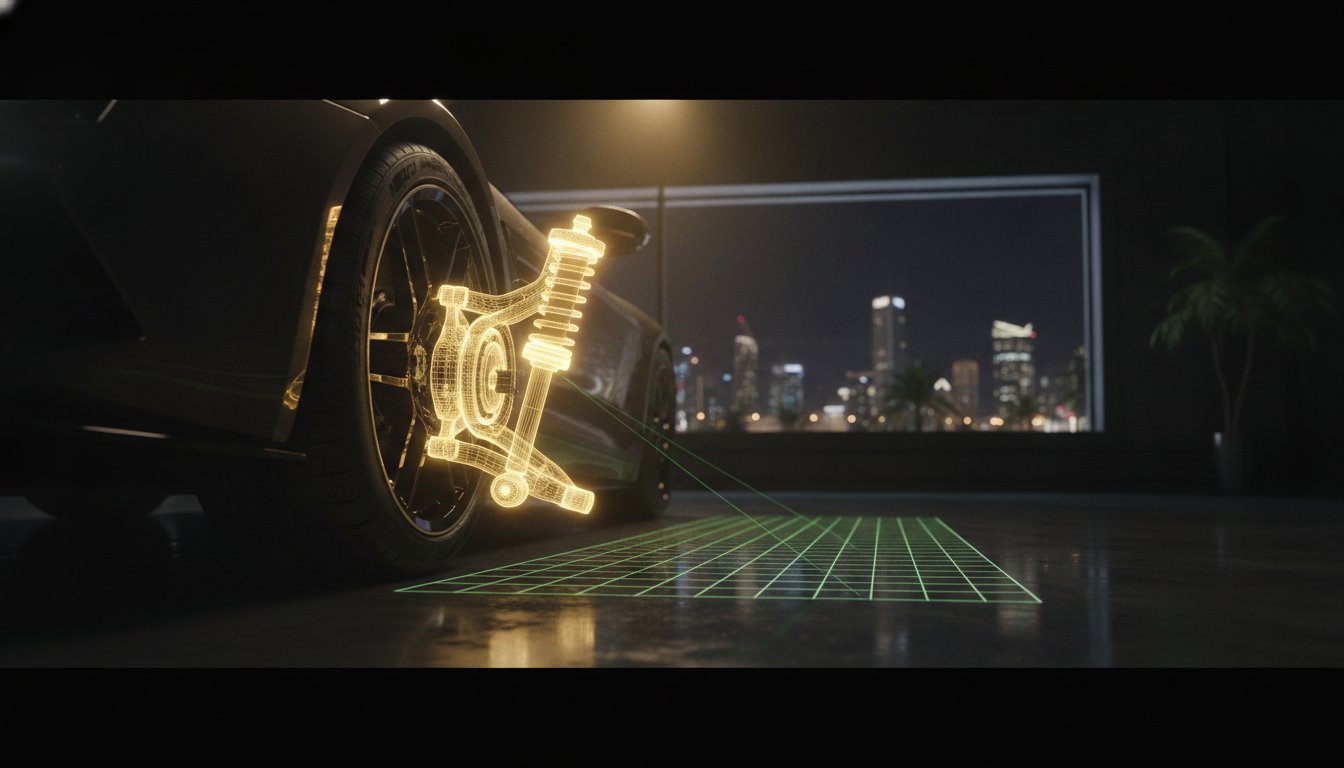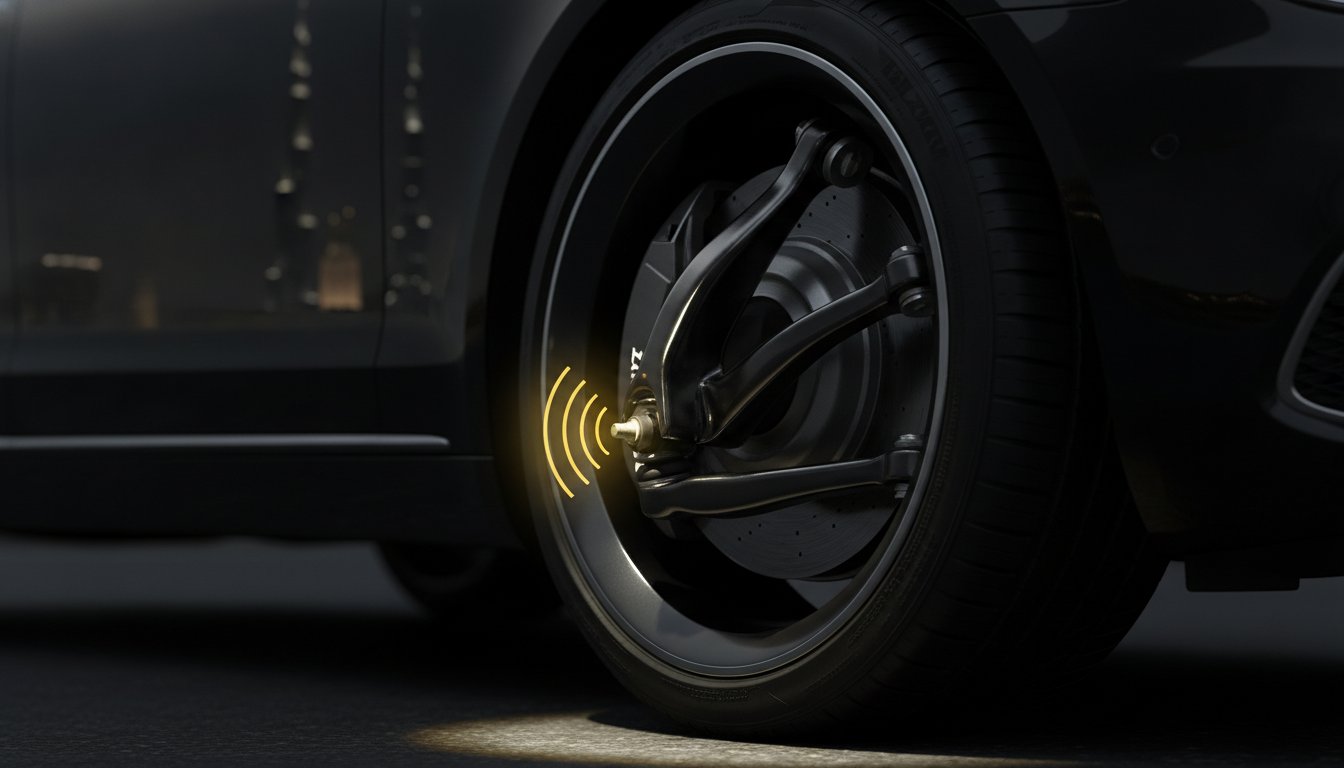
Did you know that mechanical failures contribute to 22% of road accidents in the UAE? If you’ve started hearing a clunking noise from front wheel when turning Dubai roads, that statistic likely feels like a personal warning. It’s incredibly stressful to feel your luxury vehicle lose its signature smoothness while merging onto the Sheikh Zayed Road. You’re probably worried about an immediate mechanical failure or the looming shadow of a massive repair bill from the main dealer.
We understand that you need clear answers and a reliable way forward. This guide will help you identify exactly what that front-end sound means for your vehicle’s safety and performance. You’ll learn how the intense Dubai heat and desert sand accelerate wear on your suspension components. We also provide a clear path to specialist repairs that beat dealer pricing without compromising on quality. We’ll examine common failure points like CV joints and bushings, confirm if your car’s safe to drive, and show you how to restore your ride’s integrity.
Is that clunking noise from front wheel when turning Dubai roads putting your safety at risk? We understand the anxiety of hearing an unfamiliar metallic sound and the worry that a major repair bill is just around the corner. This article identifies exactly what that front-end noise means for your luxury vehicle and provides a professional path to resolving it safely in our unique desert environment.
You’ll learn about the four primary mechanical failures, including how the intense 50°C heat destroys rubber bushings and CV boots. We also provide a practical diagnostic checklist to help you decide if your car is still safe to drive or requires immediate attention. Our guide ensures you have a clear understanding of the failing parts and offers a specialist repair solution that maintains high standards while beating main dealer pricing. Get the facts you need to keep your vehicle RTA-compliant and your drive perfectly smooth.
Identifying the Clunk: Why Your Front Wheel Makes Noise When Turning in Dubai
What exactly is a front-end clunk? It’s a heavy, metallic sound that occurs when your vehicle’s weight shifts or when you provide steering input. This noise isn’t just an annoyance; it is a clear warning sign from your vehicle’s suspension system. When you turn the steering wheel, you’re changing the geometry of your front end and putting immense stress on various linkages. If a part has developed “play” or lost its lubrication, that stress manifests as a physical impact you can hear and often feel.
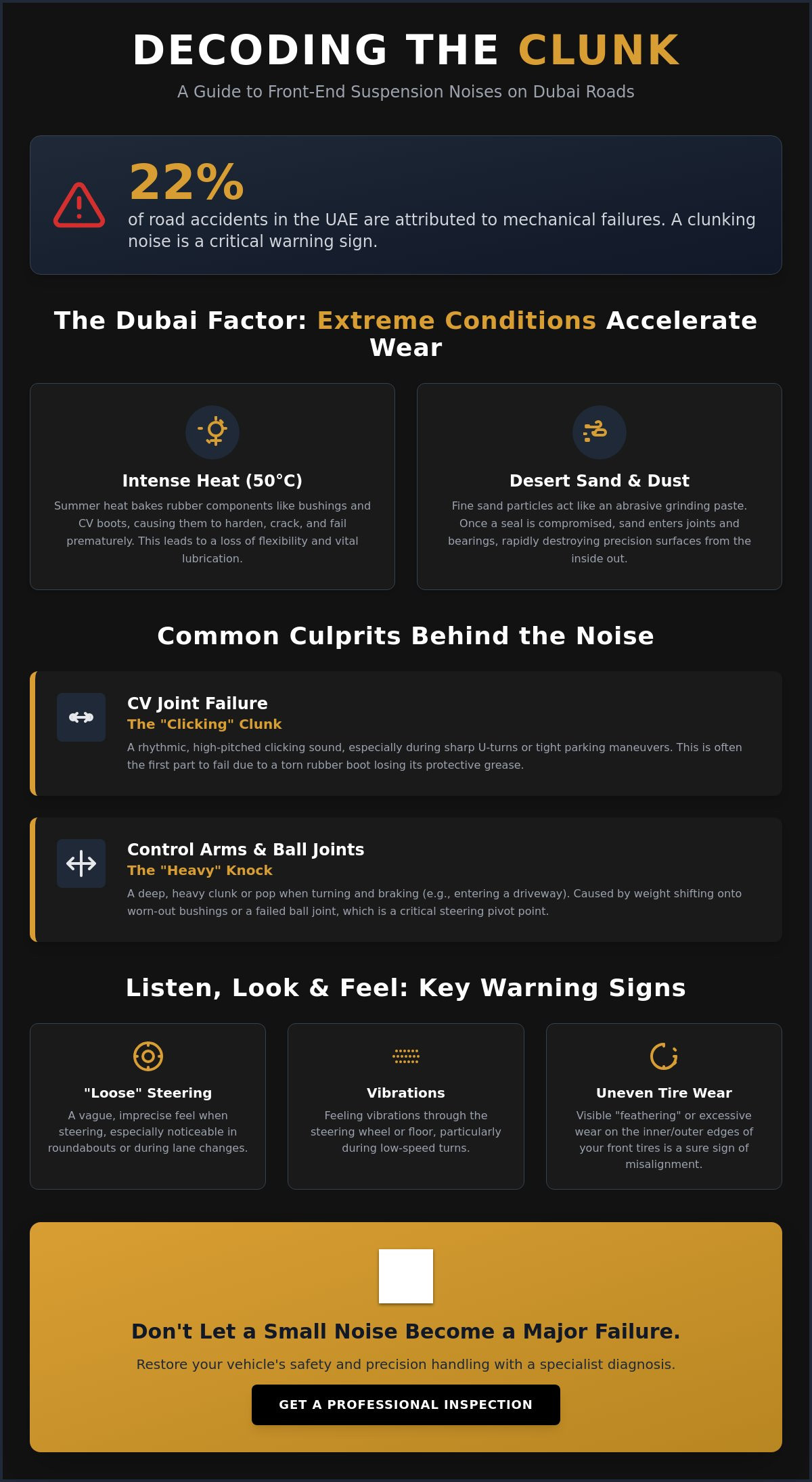
In Dubai, these mechanical protests often follow a specific seasonal pattern. You might notice the clunking noise from front wheel when turning Dubai roads becomes more aggressive during the cooler winter months. This happens because rubber bushings that were baked and hardened by the 50°C summer heat begin to contract. This loss of flexibility makes them brittle and noisy. Similarly, sandstorms introduce fine particulates that act like a grinding paste. Once sand enters a compromised seal, it rapidly destroys the precision surfaces of your ball joints and bearings.
You must distinguish between a ‘click’ and a ‘clunk.’ A rhythmic, high-pitched clicking usually indicates a failing CV joint. A deep, heavy clunk typically points to a ball joint, control arm, or subframe mount that has reached its limit. Recognizing this difference is the first step toward an accurate diagnosis.
Common Symptoms Accompanying the Noise
Does your steering feel “loose” when navigating the many roundabouts in Dubai? This vague sensation often accompanies a clunking sound. You should also stay alert for vibrations felt directly through the steering wheel during low-speed maneuvers. Don’t forget to inspect your tyres. Uneven wear on the inner or outer edges is a classic sign that your suspension components are no longer holding the wheel in the correct alignment. If you see “feathering” on the tread, your clunking noise is already affecting your vehicle’s safety and tyre life.
When Does the Noise Happen?
Timing is everything when diagnosing suspension issues. If the noise only occurs at full steering lock, it often points to a CV joint or a steering rack problem. However, if you hear the sound while braking as you turn into a driveway, you’re witnessing the effects of weight transfer. As the car’s nose dives, the added load forces worn control arm bushings to collapse. It’s common for these noises to disappear at highway speeds because the centrifugal force stabilizes the components. The sound returns during parking because low-speed turns require maximum torque and create the most friction within the joints.
The 4 Main Culprits Behind Front-End Clunking Noises
When you hear a clunking noise from front wheel when turning Dubai traffic often forces you into tight maneuvers that expose these underlying mechanical weaknesses. While many drivers assume any noise signals a total system failure, the issue usually stems from one of four specific components that have reached their limit. Identifying the right part early prevents a minor noise from becoming a dangerous roadside breakdown.
CV Joint Failure: The Clicking Clunk
The Constant Velocity (CV) joint is the most frequent offender for front-end noise. This part allows your wheels to receive power while simultaneously turning and moving up or down over road imperfections. A thick rubber boot protects the joint and holds essential grease. In Dubai, extreme heat causes these boots to crack and become brittle. Once the boot tears, grease escapes and desert sand enters. A dry CV joint eventually grinds itself to pieces as metal spheres oscillate without lubrication against a scored housing. You’ll notice this most during sharp U-turns or when pulling into tight parking spots where the joint is under maximum angular stress.
Control Arms and Ball Joints: The Heavy Knock
Modern luxury vehicles often utilize complex multi-link setups that require a German car suspension specialist Dubai to diagnose correctly. These systems use multiple control arms, each equipped with its own rubber bushing. When these bushings perish, the arm moves excessively, creating a heavy metal-on-metal knock. Ball joints serve as the critical pivot points for your steering. If a ball joint fails, you might hear a sudden, loud ‘pop’ during a turn. In extreme cases, a completely worn ball joint can cause the wheel to physically collapse. This failure often correlates with your car pulling to one side as the suspension geometry shifts out of its safe tolerance.
Strut Mounts and Bearings: The Upper Clunk
Don’t ignore clunks coming from the top of the wheel well. Strut mounts and their internal bearings allow the entire strut assembly to rotate as you steer. If these bearings seize or the rubber mount collapses, the coil spring may bind and then “jump” suddenly. This creates a clunking sensation that you can feel directly through the chassis and steering column. If you’re unsure which component is failing, it’s best to speak with a specialist technician who can perform a safe, overhead inspection of your vehicle’s front end.
The Dubai Factor: How Heat and Sand Destroy Your Suspension
Why does a vehicle that performed perfectly in Europe suddenly develop a clunking noise from front wheel when turning Dubai roads? The answer lies in our extreme environmental conditions. While manufacturers design luxury vehicles for global use, the combination of 50°C summer peaks and pervasive desert sand creates a “perfect storm” for mechanical wear that few other regions can match. These elements don’t just age your car; they actively degrade the materials meant to keep your drive smooth and silent.
Dubai’s infrastructure also plays a unique role in suspension failure. Our “speed bump culture” in residential areas like Jumeirah or Emirates Hills puts constant vertical stress on luxury struts. When you combine this repetitive impact with the high humidity and salt air found in coastal districts like JBR and Palm Jumeirah, you have a recipe for accelerated corrosion. These factors turn minor component aging into a critical safety concern much faster than most drivers expect. It’s why a suspension system that might last ten years elsewhere often requires attention in half that time here.
Rubber Degradation in the UAE
Rubber is the silent hero of your suspension, but it’s also the most vulnerable to the UAE climate. High temperatures and intense UV radiation dry out the plasticizers in your bushings and CV boots, making them brittle and prone to cracking. Once the rubber loses its elasticity, it can no longer absorb steering vibrations or seal out contaminants. This leads to that characteristic “creaking” clunk as the hardened rubber struggles to flex during a turn. Don’t overlook your dust covers. If these small protective sleeves fail, they allow heat to directly attack the precision seals underneath, leading to premature leaks in your shock absorbers.
Sand Ingress: The Silent Killer
Have you ever considered how abrasive desert sand actually is? Fine silica sand behaves like a grinding paste when it enters a compromised joint. Once a CV boot or ball joint seal develops even a hairline crack from heat stress, sand infiltrates the internal mechanism. It quickly scores the polished metal surfaces, turning a smooth pivot into a grinding, clunking mess. Sand in a suspension joint is an immediate repair priority that requires professional intervention to prevent total failure. Catching a torn boot early can save you from a costly CV axle replacement by allowing for a simple, low-cost boot and grease service before the joint itself is destroyed.
Diagnostic Checklist: Is Your Car Safe to Drive?
Is your vehicle still safe to operate with that sound? Many drivers ignore a clunking noise from front wheel when turning Dubai roads, assuming it’s just a minor nuisance that can wait until the next service. This is a dangerous gamble. If the noise stems from a structural component like a ball joint or a control arm, a total failure could lead to a loss of steering control at highway speeds. Use this five-step checklist to assess your vehicle’s current condition before you get back behind the wheel.
- Step 1: Visual Inspection. Turn your wheels to full lock and look inside the wheel wells. Do you see thick, dark grease splattered on the brake components or the inner rim? This confirms a torn CV boot, which we previously identified as a primary cause of joint failure.
- Step 2: The ‘Bounce Test.’ Push down firmly on the front corner of your car and let go. A healthy strut should settle immediately. If the car continues to bounce two or three times, your shock absorbers are no longer controlling the spring’s energy.
- Step 3: Stationary Steering Play. With the engine running and the car in park, gently move the steering wheel back and forth. If you hear the clunking noise while stationary, the issue is likely in the steering rack or the tie rod ends rather than the CV joints.
- Step 4: Identify the ‘Critical Clunk.’ If the noise is a sharp, metallic “crack” that you can feel through the floorboards, stop driving. This indicates a component that has developed significant physical play and is at risk of detaching.
- Step 5: Professional Shakedown. The only way to be 100% certain is to have the vehicle raised on a hydraulic lift. A technician will perform a shakedown test, using leverage to check for movement in bushings that are impossible to see while the car is on the ground.
The ‘Danger Zone’ Symptoms
You must recognize when a noise transitions from a “repair soon” to a “stop now” situation. If your clunking noise from front wheel when turning Dubai traffic is accompanied by heavy steering or a ‘binding’ feeling, your steering rack or ball joints may be seizing. Does the noise happen when you are driving perfectly straight? This suggests the component is so worn that even minor road vibrations are causing metal-on-metal impact. For luxury SUVs, a failing ball joint is a ‘tow-only’ situation. The weight of these vehicles can easily snap a compromised joint, causing the wheel to fold outward and resulting in catastrophic damage.
Professional vs. DIY Diagnosis
Looking at your car on a flat driveway has severe limitations. Without the ability to unload the suspension, you cannot see the hairline cracks in bushings or the subtle play in a multi-link arm. Visiting a specialized suspension shop Dubai allows for a precision diagnosis using diagnostic tools that pinpoint the noise to a single bush or bearing. This accuracy prevents the “parts cannon” approach, where general garages replace multiple expensive parts hoping to find the culprit. If you are unsure about your car’s safety, book a professional safety inspection to get a definitive answer today.
Specialist Suspension Repair in Dubai: Restoring Your Precision Handling
Resolving a clunking noise from front wheel when turning Dubai isn’t just about replacing a single part; it’s about restoring the engineered precision of your vehicle. General garages often struggle with the sophisticated multi-link systems found in modern performance cars. For instance, an Audi suspension repair Dubai specialist understands that these vehicles require specific torque sequences and specialized bushings that generic workshops frequently overlook. Misdiagnosis leads to “ghost noises” that return weeks later, costing you more time and frustration.
Why choose a specialist over a main dealership? While dealers offer brand recognition, they often carry high overheads that translate to inflated labor rates and long waiting times. A dedicated suspension workshop provides a more agile, focused service. We prioritize high-quality OEM or aftermarket parts specifically designed to withstand the brutal UAE heat. These components feature reinforced seals and heat-resistant rubber compounds that outperform standard international parts. By choosing the right components, you ensure your luxury car suspension repair Dubai delivers a “like-new” driving experience that lasts.
Our Approach to Front-End Noise
We don’t believe in guesswork. Our process begins with a comprehensive multi-point inspection of every steering and suspension link. Whether you drive a Porsche, Range Rover, or Mercedes, we examine the entire geometry to find the root cause of the clunk. We provide transparent reporting so you know exactly which parts are failing and why. Our commitment to excellence is reflected in our ride comfort restoration Dubai case studies, where we’ve successfully eliminated complex front-end noises that other garages couldn’t solve. We focus on restoring the silent, smooth glide your vehicle was designed for.
Book Your Inspection Today
Don’t ignore the warning signs your car is giving you. That faint clunking noise from front wheel when turning Dubai roads will eventually evolve into a major mechanical failure. Small sounds today become expensive recovery bills tomorrow. Our facility is equipped with the precision tools needed to diagnose and repair your suspension correctly the first time. Take the stress out of vehicle maintenance and trust the experts who understand the unique demands of Dubai driving. Contact Suspension Repair Dubai for a professional inspection today and get back to enjoying a safe, quiet drive.
Restore Your Vehicle’s Precision and Safety
Ignoring a clunking noise from front wheel when turning Dubai roads is more than just a minor inconvenience; it is a direct risk to your safety. We have seen how the intense UAE heat and abrasive desert sand turn flexible rubber bushings into brittle, failing components that compromise your steering. Whether it is a failing CV joint or a worn ball joint, catching these issues early prevents the high costs and stress associated with a total mechanical failure on the highway.
Our team provides specialized suspension diagnostics and shock absorber repair tailored to the unique demands of the Middle East. As specialists in Audi, BMW, and Range Rover systems, we offer a level of precision that general garages simply cannot match. We focus on providing a high-end resolution that restores your ride comfort while beating dealer pricing. Don’t wait for a small sound to become a major repair. Book Your Specialist Suspension Diagnosis in Dubai Today. We are here to ensure your luxury vehicle remains as reliable and smooth as the day you bought it.
Frequently Asked Questions
Is it safe to drive with a clunking noise when turning?
It is not safe to drive your vehicle if you hear a persistent clunking noise. This sound signals that a critical component in your steering or suspension is no longer secured or functioning correctly. A total failure of a ball joint or tie rod could lead to a loss of steering control at highway speeds. You should have a specialist inspect the vehicle immediately to ensure it remains roadworthy and safe for Dubai’s busy roads.
How much does it cost to fix a clunking noise from the front wheel in Dubai?
The cost to resolve a clunking noise from front wheel when turning Dubai depends entirely on which component has failed and your vehicle’s make. Replacing a simple rubber bushing is significantly more affordable than replacing a complete steering rack or a luxury air strut. We recommend a professional diagnostic to identify the specific part needed, which prevents the unnecessary expense of replacing functioning components through guesswork.
Can a bad wheel bearing cause a clunking sound?
Wheel bearings typically produce a constant humming or growling sound that changes with vehicle speed. However, if a bearing is severely damaged, it can develop enough physical “play” to cause a clunking sensation during weight transfer. This usually happens in conjunction with other symptoms like a vibrating steering wheel or a noticeable pull to one side while driving.
Why does my car only clunk when I turn the wheel all the way to one side?
Hearing a noise only at full steering lock often points toward a failing CV joint or a problem with the steering stops. When the wheel is turned to its limit, the joint is at its maximum angle and under the most stress. If the protective boot has failed and allowed sand to enter, the dry metal surfaces will grind and clunk specifically during these tight maneuvers.
How long does a suspension repair take at a specialist workshop?
Most standard suspension repairs, such as replacing control arms or CV axles, are completed within three to six hours. More complex systems in luxury SUVs may require a full day if specialized calibration is necessary after the mechanical work. Our workshop focuses on efficiency to ensure you spend minimal time without your vehicle while maintaining a high standard of workmanship.
Will a front-end clunk cause my tyres to wear out faster?
A front-end clunk will almost certainly lead to rapid and uneven tyre wear. When a suspension component like a bushing or ball joint fails, it allows the wheel to tilt or “toe” out of its correct alignment. This causes the tyre to scrub against the road surface, which can destroy a new set of tyres in just a few weeks of driving.
What is the difference between a clicking noise and a clunking noise?
A clicking noise is usually rhythmic and increases in speed as you accelerate, which is a classic symptom of a failing CV joint. In contrast, a clunking noise from front wheel when turning Dubai is a heavier, duller sound that happens during weight shifts or when hitting bumps. This distinction helps our technicians quickly narrow down the search to either the drivetrain or the structural suspension links.
Do I need an alignment after fixing a clunking suspension part?
You should always perform a professional wheel alignment after replacing any major suspension or steering component. Even a minor change in the position of a control arm or tie rod can throw your vehicle’s geometry out of balance. Proper alignment ensures your car handles predictably and protects your investment in tyres by preventing premature tread wear.