Could that faint clunking sound under your floorboard be the only thing standing between a smooth commute and a dangerous high-speed mechanical failure? When you’re cruising at 120 km/h on the E11, your safety depends entirely on the health of your vehicle’s complex underpinnings. This makes professional suspension diagnostics Dubai a non-negotiable part of luxury car ownership. You probably already feel that Dubai’s extreme heat and fine desert sand degrade sophisticated air and hydraulic systems faster than in milder climates. It’s natural to feel anxious when a new squeak appears, especially when you’re worried about escalating repair costs or failing your next mandatory RTA inspection.
We understand that you want your vehicle to handle with the precision it had on day one. In this guide, you’ll learn how to identify the specific sources of handling issues and what happens during a professional diagnostic check. We’ll show you how to distinguish between minor maintenance and major repairs so you can make informed decisions. This overview walks you through the expert process required to keep your luxury brand performing safely and reliably on UAE roads.
Key Takeaways
- Understand how your suspension maintains tire contact and why professional suspension diagnostics Dubai are essential for your safety at high speeds.
- Learn the 5-step preliminary check, including the “bounce test” and visual inspections, to catch worn struts or fluid leaks before they become costly.
- Discover how specialists use digital vibration testing and ECU interrogation to accurately pinpoint air suspension errors in luxury brands.
- Identify critical warning signs like vehicle pulling or excessive body roll on Sheikh Zayed Road that demand immediate expert attention.
- Distinguish between diagnostic specialists and general mechanics to ensure your high-end vehicle receives the precise care it requires.
Why Suspension Diagnostics in Dubai Are Critical for Your Safety
Your vehicle’s ability to stay glued to the asphalt isn’t just about the tires; it’s about the intricate network of vehicle suspension systems that manage every bump and turn. Professional suspension diagnostics Dubai involves a systematic evaluation of your springs, dampers, and linkages to ensure they’re functioning as a cohesive unit. This process is vital because your suspension maintains constant tire contact with the road. Without it, your braking efficiency drops and your steering becomes unpredictable. When you’re driving at high speeds on the Sheikh Zayed Road, that loss of precision can be catastrophic.
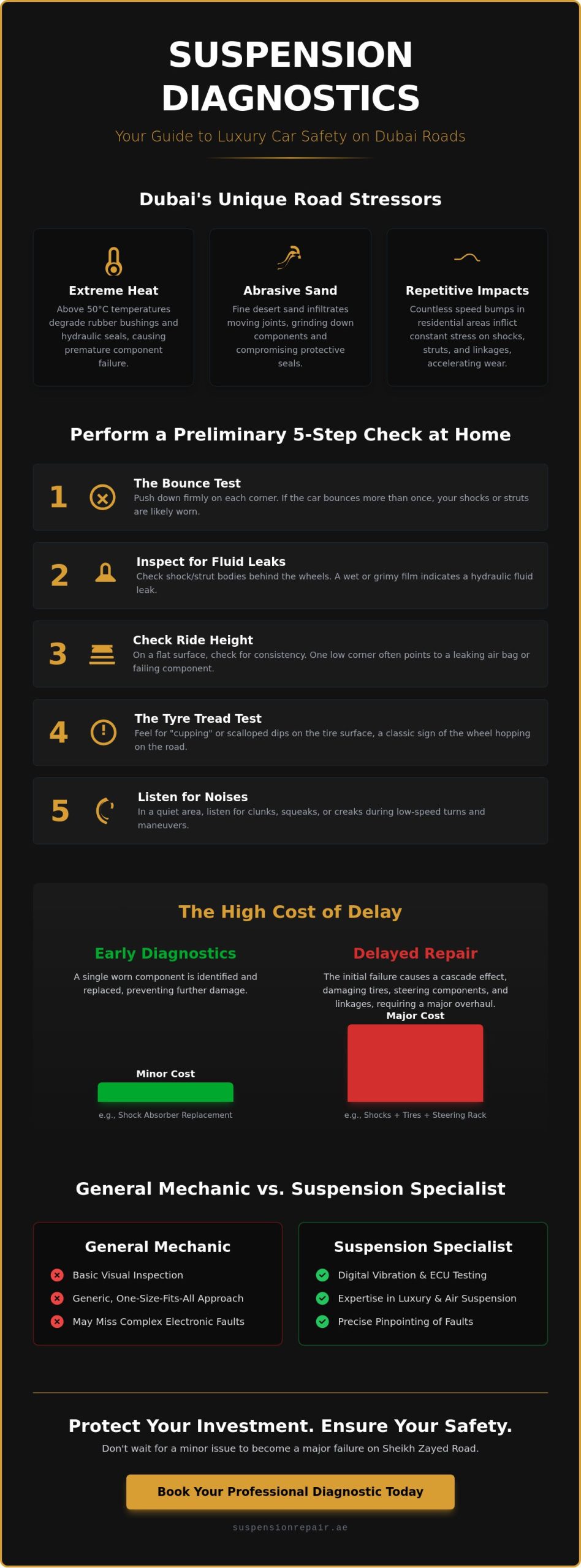
Dubai presents a unique set of challenges for any car. In residential areas like Jumeirah or Al Barsha, your vehicle faces hundreds of speed bumps every week. These repetitive impacts stress the shocks and struts significantly more than standard highway driving. When you combine this with summer temperatures that frequently soar above 50°C, the rubber bushings and hydraulic seals inside your dampers begin to degrade. Intense heat makes rubber brittle. Once these components fail, your luxury ride becomes a safety hazard rather than a precision machine.
The High Cost of Delayed Diagnostics
Ignoring a minor clunk today leads to a massive bill tomorrow. A single worn shock absorber doesn’t just feel uncomfortable. It causes rapid, uneven tire wear that forces you to replace expensive sets of tires months earlier than expected. There’s also a severe safety risk. A compromised suspension increases the likelihood of “hydroplaning” during those rare but heavy Dubai rainstorms. If your dampers can’t keep the tires pressed firmly against the road surface, you lose control instantly. Early suspension diagnostics Dubai prevents this by identifying issues before they damage your expensive steering rack or transmission components.
Dubai Road Stressors: Heat and Sand
The desert environment is relentless on mechanical parts. Fine sand acts like an abrasive, grinding down the moving suspension joints and compromising the integrity of protective seals. Thermal expansion is another critical factor. High heat causes the air bags in sophisticated air suspension systems to expand and contract aggressively. This leads to microscopic cracks and eventual leaks that can leave your car sitting unevenly. Standard dealer-recommended service intervals often fail to account for these extreme UAE conditions. You need a proactive approach that prioritizes the specific wear patterns caused by our local climate and infrastructure.
How to Perform a Preliminary Suspension Check: A 5-Step Guide
While high-end machinery requires specialized tools, you don’t need a workshop to spot the early warning signs of component failure. Performing a regular home inspection helps you stay ahead of costly repairs. If you notice your car handling differently on the commute to Downtown, follow these five steps to assess your vehicle’s health. These simple checks serve as the first stage of suspension diagnostics Dubai before you seek professional intervention.
- Step 1: The Bounce Test. Go to each corner of your vehicle and push down firmly on the body. A healthy suspension should settle almost immediately. If the car continues to bounce more than once or twice, your shock absorbers are likely worn and losing their damping ability.
- Step 2: Inspect for Fluid Leaks. Use a flashlight to look behind the wheels at the shock absorber or strut bodies. Do you see wetness or a thick coating of grime? This “misting” indicates that hydraulic fluid is escaping, which means the component can no longer control spring movement effectively.
- Step 3: Check Ride Height Consistency. Park on a flat surface and look at the gap between the tires and the wheel arches. Is one corner sitting lower than the others? For owners of vehicles with air suspension, a leaning car usually points to a leaking air bag or a failing compressor.
- Step 4: The Tyre Tread Test. Run your hand over the surface of your tires. Feel for “cupping” or scalloped dips in the rubber. This uneven wear pattern is a classic sign that your suspension is allowing the wheel to hop, rather than keeping it firmly planted.
- Step 5: Listen During Low-Speed Maneuvers. Turn off the radio and drive slowly through a quiet parking lot. Pay close attention to any sounds when turning the steering wheel or crossing small speed bumps. These noises are often the first indicators of mechanical distress.
Identifying Common Suspension Noises
Does your car clunk or squeak? A heavy clunking sound when driving over bumps usually points toward failing ball joints or stabilizer links. Conversely, a rhythmic squeaking during turns or over undulations often signifies dry, cracked rubber bushings that have been baked by the desert sun. If you hear a distinct hissing sound after parking, it is a clear warning of an air suspension leak. Catching these sounds early allows you to schedule a professional inspection before a minor leak becomes a total system failure.
The Visual Inspection Checklist
Beyond the obvious leaks, look for torn dust boots on your CV joints and steering rack. These rubber covers protect vital moving parts from Dubai’s abrasive sand. If the boot is ripped, grit will enter the joint and cause rapid failure. You should also watch for “nose-diving” when braking or excessive leaning when the vehicle is parked overnight. These symptoms rarely resolve themselves. While home checks are useful, they must be followed by professional diagnostic standards to ensure your electronically controlled systems are calibrated correctly. Expert suspension diagnostics Dubai ensures every sensor and actuator meets original manufacturer specifications for total road safety.
Understanding Professional Suspension Diagnostic Methods for Luxury Cars
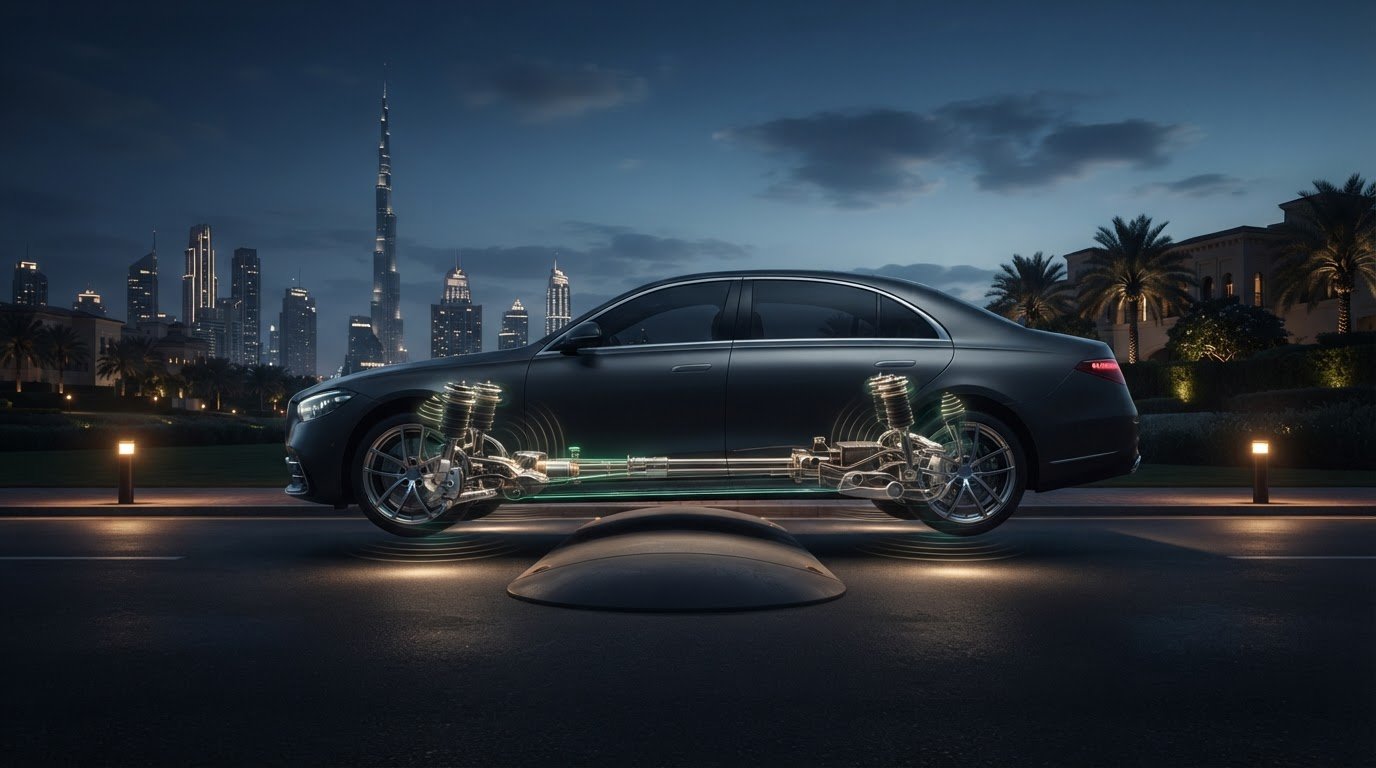
Professional suspension diagnostics Dubai goes far beyond a simple visual check. While your home inspection identifies obvious leaks, specialized workshops use digital vibration testing to measure damping efficiency with scientific precision. These “shaker plates” simulate various road conditions to determine if your shock absorbers are operating within the manufacturer’s specified range. This data-driven approach ensures that you only replace components that are actually failing, saving you from unnecessary expenses and guesswork.
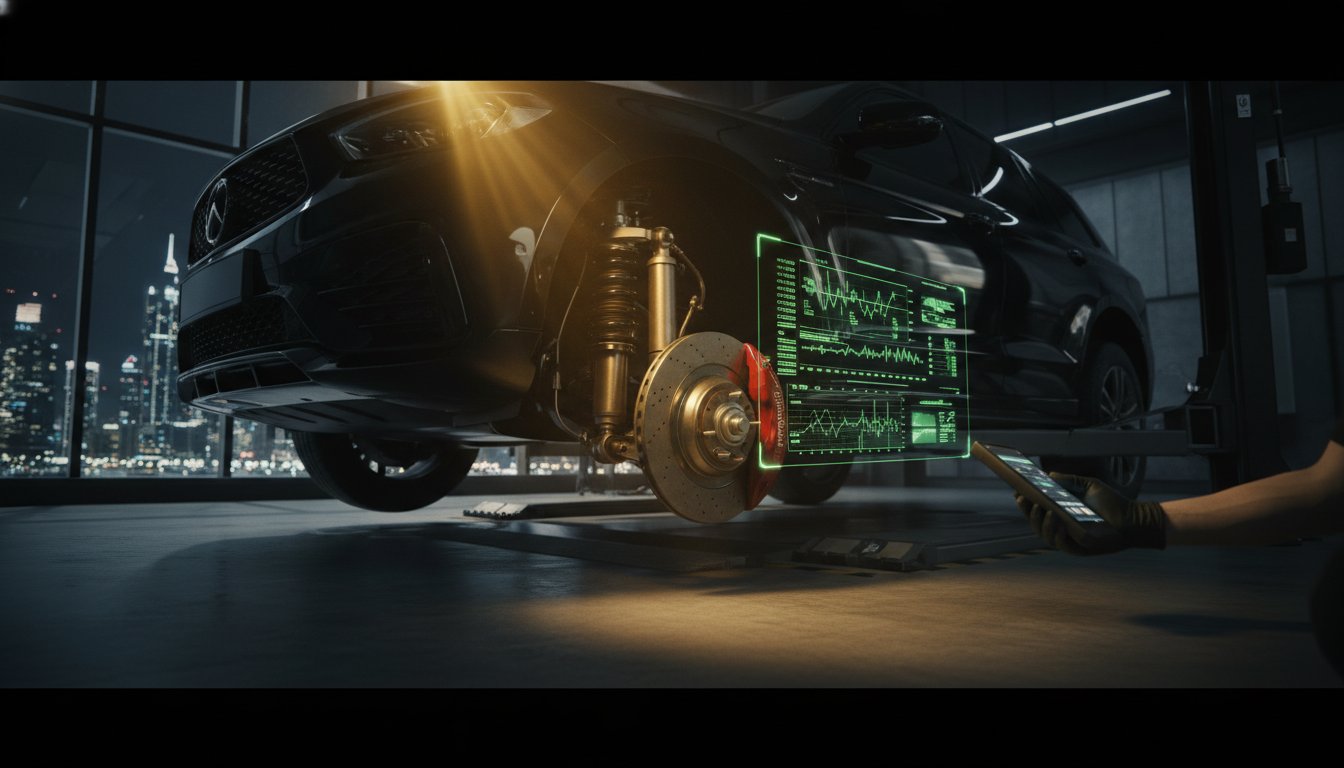
Why settle for a generic OBD-II scan? For luxury vehicles, computerized ECU interrogation is the only way to communicate with complex control modules. Systems like Mercedes-Benz Active Body Control (ABC) or Porsche Active Suspension Management (PASM) require brand-specific scanners that can read proprietary error codes. These specialized tools allow technicians to perform hydraulic pressure testing on high-pressure lines and actuators. This identifies internal failures that a basic scanner would miss entirely, ensuring your safety isn’t compromised by invisible wear.
Diagnostic Tools for Air Suspension Systems
Does your car sit lower after being parked for just a few hours? Technicians use advanced software to test air compressor output and valve block functionality. These tools can detect “slow leaks” in the air bags that haven’t yet triggered a dashboard warning but are already overworking your compressor. Once a component is replaced, precise calibration of the ride height sensors is mandatory. This restores the vehicle’s factory stance and aerodynamic profile, which is essential for maintaining stability at highway speeds.
Specialist vs. Generalist Inspection
The complexity of modern multi-link systems means that “parts changers” often do more harm than good. Precision torque is critical when reassembling these components. Over-tightening a bushing can lead to premature failure in just a few months. This is why specialized Audi suspension repair Dubai requires technicians who follow exact factory workshop manuals. The same principle applies to heavy-duty US-spec vehicles, where American car suspension repair Dubai demands an understanding of the specific load requirements and chassis engineering unique to these models. Performance muscle cars are no exception; drivers seeking Mustang suspension repair Dubai require specialists who understand the unique demands of MagneRide damping systems and the accelerated rubber degradation caused by UAE heat. Organizations like the Automotive Service Association emphasize that diagnostic accuracy is the foundation of ethical repair. By choosing a specialist who invests in brand-specific hardware, you ensure your high-end vehicle maintains its signature handling and safety without the risk of repetitive repairs.
Recognizing Warning Signs: When to Seek Expert Suspension Diagnostics
Does your vehicle pull to one side even though you recently had a wheel alignment? This frustrating symptom is a primary indicator that your steering and chassis components are no longer working in harmony. While many drivers blame the tires, the root cause is often a worn control arm or a collapsed spring. Professional suspension diagnostics Dubai identifies these mechanical discrepancies before they lead to expensive tire replacements or steering rack damage. You shouldn’t have to fight your steering wheel to maintain a straight line on the highway.
Pay close attention to how your car behaves during lane changes on Sheikh Zayed Road. If you notice excessive “body roll” where the vehicle leans heavily to one side, your stabilizer bars or dampers are likely compromised. You might also experience a “diving” sensation where the nose of the car dips sharply toward the asphalt when you brake at a traffic light. These aren’t just minor annoyances. They significantly increase your stopping distance and reduce your ability to perform emergency maneuvers safely. A harsh ride quality, where you feel every pebble or crack in the road, suggests your shocks have lost their ability to isolate the cabin from road energy.
Handling and Stability Issues
A “wandering” steering wheel that requires constant correction usually points to worn control arm bushings. These critical rubber components act as pivot points for your wheels. When they degrade due to heat and sand, your wheels lose their precise orientation. This creates a dangerous delay in steering response that can be terrifying at high speeds. Investing in expert car suspension repair Dubai restores the factory handling and precision you expect from a luxury brand. It ensures your vehicle reacts predictably to every input, providing peace of mind in heavy traffic.
Tyre Wear and Alignment Symptoms
Your tires often reveal what your eyes cannot see. “Feathering,” where the tread blocks feel sharp when rubbed in one direction, usually indicates an alignment issue caused by worn linkages. “Cupping,” which appears as scooped-out dips around the tire circumference, is a definitive sign that your shocks are failing to keep the tire pressed firmly against the road. If you install new tires without performing suspension diagnostics Dubai first, those expensive new tires will fail prematurely. There is also a direct connection to fuel efficiency. A dragging or misaligned suspension increases rolling resistance, which forces your engine to work harder and increases your monthly fuel costs.
If your ride feels less than perfect, don’t ignore the warning signs. Book a professional suspension inspection today to ensure your luxury vehicle remains safe and efficient on the road.
Choosing the Right Specialist for Suspension Diagnostics in Dubai
Luxury brands like Rolls Royce, Bentley, and Ferrari utilize proprietary suspension architectures that require more than just a standard wrench. These vehicles feature active damping and complex hydraulic systems that demand suspension diagnostics Dubai performed by dedicated experts. A general mechanic might understand the basics, but they often lack the specialized knowledge to calibrate a Ferrari’s magnetic ride control or a Bentley’s air leveling system. You need a partner who understands the nuance of high-end engineering and the specific stresses our climate places on these systems.
The market is full of “parts changers” who guess at the problem by replacing components one by one. This approach is not only expensive but also fails to address the underlying issue. A true diagnostic specialist uses data to pinpoint the exact failure point. Look for workshops that prioritize transparency. They should provide visual proof of failure, such as photos of leaking seals or computer readouts of sensor discrepancies. A focused workshop that specializes exclusively in suspension and shocks offers a level of mastery that a general repair shop simply cannot match.
What to Ask Your Suspension Mechanic
Before handing over your keys, ensure the workshop is equipped for your specific make and model. Ask if they use brand-specific diagnostic software for air suspension systems rather than generic tools. Inquire if they provide a detailed report of the bushing and ball joint condition. This documentation is vital for your vehicle’s service history and future resale value. Finally, confirm whether they use OEM parts or high-quality aftermarket equivalents. For a luxury ride, the quality of the replacement component determines whether your car maintains its signature comfort or feels like a budget sedan.
Book Your Precision Diagnostic Today
Professional suspension diagnostics Dubai save more than just money; they save lives. Your suspension is the only thing keeping your car stable during a sudden swerve or a hard stop. Ignoring a clunking sound or a slight pull is essentially ignoring your car’s SOS signal. These symptoms rarely disappear on their own and usually lead to more dangerous mechanical failures. Don’t wait for a total system collapse that leaves you stranded. Book your specialist suspension diagnostic at our Dubai facility to restore the safety and performance of your ride. Our expert team provides the clarity and precision your luxury vehicle deserves.
Restore Your Vehicle’s Precision and Road Safety
Maintaining a luxury vehicle in the UAE requires a proactive approach to the unique environmental stressors found in our region. You’ve learned how to spot early warning signs and why home checks are only the first step in protecting your investment. While a basic visual check can reveal obvious failure, only specialized suspension diagnostics Dubai can pinpoint the microscopic leaks and sensor errors common in sophisticated air systems. Don’t let a minor squeak turn into a major safety risk or a failed RTA inspection.
Our facility is focused exclusively on suspension and shock absorber repair for elite brands like Rolls Royce, Bentley, and leading German manufacturers. We utilize state-of-the-art diagnostic equipment to ensure every repair is backed by data rather than guesswork. This specialized focus ensures your car returns to the road with its original handling and comfort intact. It’s time to stop worrying about clunks and start enjoying the smooth ride you deserve.
Get a Professional Suspension Diagnostic for Your Luxury Car today and drive with renewed confidence on every journey.
Frequently Asked Questions
How much does a suspension diagnostic cost in Dubai?
Industry rates for a basic suspension inspection in the UAE typically start from 100 AED, though the final cost depends on the complexity of your vehicle’s electronic systems. Comprehensive suspension diagnostics Dubai for luxury brands often involve specialized digital testing and ECU interrogation, which may be priced differently than a standard visual check. It’s always best to request a detailed breakdown of the diagnostic process to understand what is being tested.
How long does a professional suspension inspection take?
A thorough professional inspection usually takes between 45 and 90 minutes to complete accurately. This timeframe allows technicians to perform a physical road test, conduct a visual undercar inspection, and use specialized equipment to measure damping efficiency. If your vehicle features complex air suspension, additional time is required to interrogate the control modules and check for slow leaks in the valve block.
Can I drive my car if the air suspension warning light is on?
You should avoid driving your vehicle if the air suspension warning light is active, as it indicates a system failure that could compromise your safety. A collapsed air bag or a failing compressor can cause the car to sit too low, leading to unpredictable handling and potential damage to the chassis. If the car is leaning significantly, it’s safer to have it transported to a specialist rather than risking a high-speed blowout.
What are the most common suspension problems for cars in Dubai?
Heat-related degradation of rubber bushings and hydraulic seal leaks are the most frequent issues faced by drivers in the UAE. The extreme summer temperatures cause rubber components to become brittle and crack much faster than in cooler climates. Additionally, the frequent impact from speed bumps in residential communities often leads to worn stabilizer links and premature shock absorber failure.
Will a suspension diagnostic detect steering issues as well?
Yes, a proper suspension diagnostics Dubai check will identify steering-related problems because these two systems are physically interconnected. Technicians examine the tie rod ends, steering rack boots, and control arm bushings, all of which influence your steering precision. Identifying play in these components during a suspension check prevents alignment issues and ensures your steering remains responsive and centered.
How often should I have my luxury car suspension checked in the UAE?
It is highly recommended to have a comprehensive chassis and suspension check every 10,000 to 12,000 kilometers to ensure roadworthiness. For luxury passenger cars, a quick inspection during every oil change is a proactive way to catch minor leaks before they escalate. Regular checks are essential in Dubai to counter the abrasive effects of desert sand and the thermal stress caused by high ambient temperatures.
Is it better to repair or replace shock absorbers?
Most modern shock absorbers and struts are sealed units designed for replacement rather than repair once they begin to leak or lose pressure. Attempting to repair a sealed damper is rarely effective and can lead to inconsistent handling. Replacing shocks in pairs across the same axle is the industry standard to maintain balanced damping performance and prevent uneven tire wear.
Can sand buildup cause suspension noise?
Yes, fine desert sand can easily infiltrate moving joints and rubber bushings, creating a persistent grinding or squeaking noise. This grit acts as an abrasive, quickly wearing down protective seals and metal surfaces if it isn’t addressed. If you hear noise after driving in sandy conditions, a professional cleaning and inspection can prevent the buildup from causing permanent mechanical damage to your linkages.