Did you know that the extreme heat and dust of the UAE can slash the lifespan of your luxury SUV’s suspension by nearly 50%? In Dubai’s harsh environment, Audi Q7 air suspension problems often surface within just four to six years. This leaves many owners stranded with a sagging chassis or a vehicle stuck in “Limp Mode.” It is a stressful situation that compromises both your safety and your vehicle’s legendary performance.
We understand the frustration of facing high dealership repair costs while dealing with an unreliable ride height. You bought an Audi for its superior engineering, and seeing it struggle with a “suspension too low” warning is disheartening. You shouldn’t have to settle for a bouncy, uncomfortable ride just because the local climate is tough on rubber seals and compressors. The good news is that a full system replacement isn’t always necessary.
This article will help you identify the exact failure points of your system and show you how to restore that signature factory ride comfort. We’ll preview the specific symptoms of air strut failure, the impact of Dubai’s heat on your compressor, and the specialized diagnostic paths available at expert workshops. By the end, you’ll know exactly how to handle your Audi’s suspension issues efficiently and safely.
Key Takeaways
- Spot the subtle warning signs of suspension failure, from overnight sagging to specific dashboard alerts, before they compromise your safety.
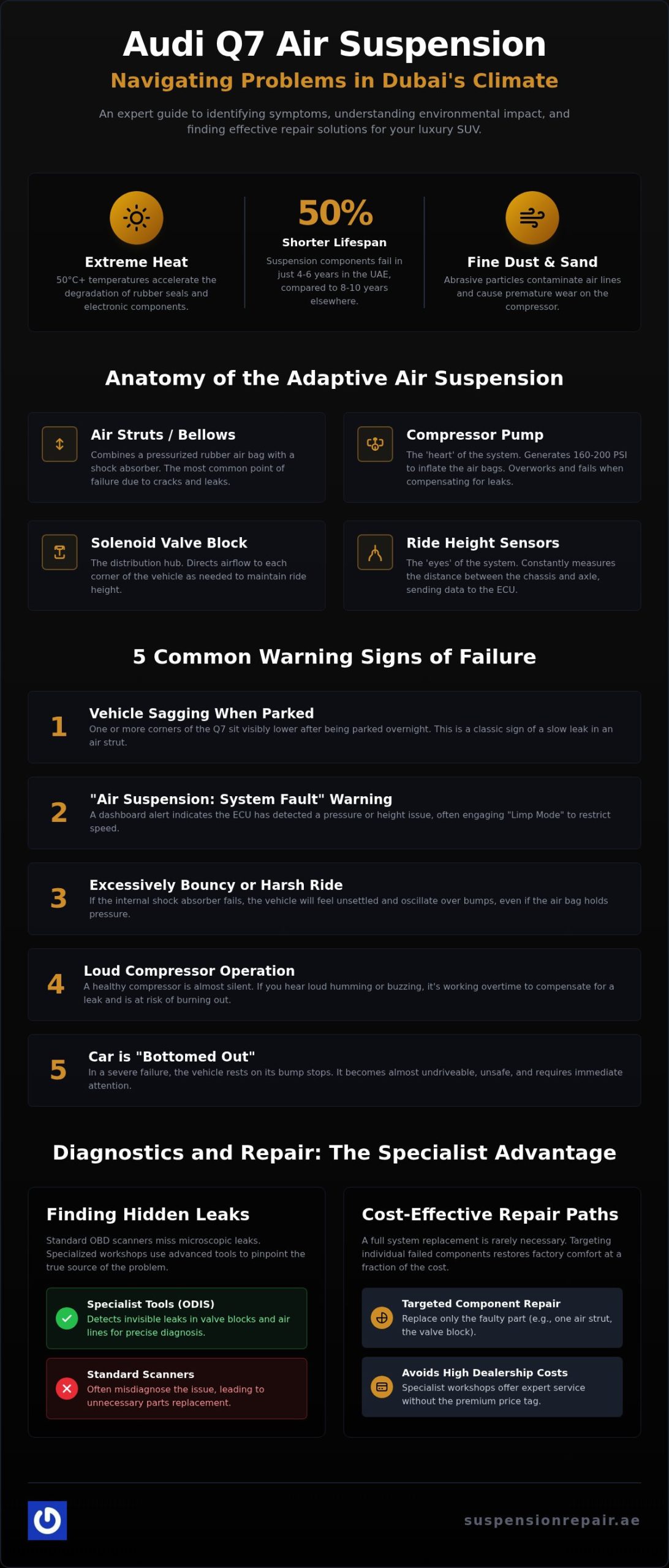
- Understand the specific ways Dubai’s 50°C+ heat and fine sand trigger Audi Q7 air suspension problems in even the newest models.
- Discover why professional diagnostic tools like ODIS are the only way to find hidden leaks that standard scanners simply cannot detect.
- Learn about cost-effective repair paths that target individual components like valve blocks instead of requiring a full system replacement.
- See how choosing a specialized workshop can restore your vehicle’s factory comfort while avoiding the high costs of a Dubai dealership.
Understanding the Audi Q7 Adaptive Air Suspension System
The Audi Q7 doesn’t just ride on traditional steel springs. It uses a sophisticated network of pressurized air to float over the road. This system, known as Adaptive Air Suspension, is what gives the Q7 its dual personality. It’s a plush luxury cruiser on Sheikh Zayed Road and a capable SUV for light off-road excursions. However, the complexity of these air suspension systems means that when things go wrong, they often go wrong quickly. Understanding how these parts interact is the first step in diagnosing common Audi Q7 air suspension problems.
The architecture has evolved significantly between generations. The MK1 (4L) models, produced until 2015, utilized a robust setup that relied heavily on a high-pressure compressor and a specific relay system known for early wear. In contrast, the MK2 (4M) models feature refined software and updated valve blocks designed for faster response times. While the newer system is more efficient, both generations are equally vulnerable to Dubai’s intense environmental stressors. These stressors eventually degrade the synthetic rubber components and electronic sensors that keep the vehicle level.
Key Components of the Air Ride System
Think of the air struts as the muscle of the system. They combine a pressurized air bag with a traditional shock absorber to provide variable support. The compressor pump acts as the heart, generating between 160 and 200 PSI of pressure to keep the bags inflated. This air is managed by the solenoid valve block. It functions as a distribution hub, sending air to specific corners of the car. Finally, ride height sensors act as electronic eyes. They constantly measure the distance between the axle and the chassis, sending data to the ECU to ensure the vehicle remains perfectly level even under heavy loads.
The Benefit of Adaptive Technology
Why did Audi choose such a complex setup? It’s all about versatility. The system adjusts damping in milliseconds, reacting to every road imperfection or sharp turn. It also provides essential load leveling. Whether you’re hauling a full family or towing a trailer, the car won’t sag. Through the Audi MMI interface, you can manually adjust your ground clearance. You can raise it to 245mm for clearing obstacles or lower it significantly for easier loading and improved aerodynamics at high speeds. This adaptability is incredible until a leak or sensor failure disrupts the harmony.
5 Common Audi Q7 Air Suspension Problems & Symptoms
Recognizing the early warning signs of Audi Q7 air suspension problems can save you from a complete roadside breakdown. While the system is designed for durability, its complexity means small issues often cascade into major repairs. If your vehicle is behaving differently than usual, it’s time to pay attention. Ignoring a small leak today often leads to a burnt-out compressor tomorrow.
Have you noticed your Q7 leaning to one side after being parked overnight? This “morning sag” is a classic indicator of a slow air leak. Usually, one corner sits lower than the others because an air bag has developed microscopic cracks. When you start the engine, the compressor might level the car, but the underlying fault remains. Another red flag is the “Air Suspension: System Fault” dashboard warning. This alert means the car’s computer has detected a deviation in pressure or height. It often forces the vehicle into a “Limp Mode,” restricting your speed to prevent further damage.
A bouncy or unsettled ride suggests the internal hydraulic dampener within the air strut has blown. The air bag might still hold pressure, but without proper damping, the car will oscillate uncontrollably over bumps. You should also listen for a loud buzzing or humming from the front passenger side. A healthy compressor is nearly silent. If it’s working overtime to compensate for a leak, it will eventually overheat and fail. The most severe stage is a total system collapse, where the vehicle sits on its “bump stops,” making it nearly undriveable and highly dangerous.
Air Leaks in the Bellows or Lines
The synthetic rubber bellows are the most common failure point. Over time, constant flexing creates tiny fissures that allow air to escape. While some DIY enthusiasts use the “soapy water test” to find bubbles, professional workshops use ultrasonic leak detection. This technology pinpoints leaks in the solenoid valve block or air lines that are invisible to the naked eye. Understanding How Air Suspension Systems Work helps you realize why even a pinhole leak can overwork the entire system.
Electronic Sensor and Module Failures
Uneven leveling isn’t always mechanical. Faulty ride height sensors or corroded wiring harnesses can send incorrect data to the control module. This is particularly common in high-mileage Q7 models where road debris has damaged the exposed sensors. Even a simple battery change or wheel alignment can sometimes trigger calibration errors, requiring a professional reset to restore balance. If you suspect your sensors are misaligned, booking a specialized diagnostic check is the most efficient way to avoid unnecessary parts replacement.
Why Dubai Climate Accelerates Audi Q7 Suspension Failure
Why does your Audi struggle more in the UAE than it would in Munich? The answer lies in the extreme environmental toll of the Arabian Peninsula. While German engineering is world-class, the specific Audi Q7 air suspension problems we see in Dubai are almost always linked to our unique climate. The combination of 50°C+ summer temperatures, high humidity, and pervasive desert sand creates a “perfect storm” for sensitive pneumatic components.
The cycle of extreme heat during the day followed by slightly cooler nights causes materials to expand and contract rapidly. This constant thermal stress weakens the structural integrity of every seal and hose in the system. Over time, the synthetic rubber used in the air bellows loses its elasticity. It becomes brittle and prone to failure. When you add high coastal humidity into the mix, electrical connectors and sensor pins begin to oxidize. This leads to the “ghost” fault codes and intermittent leveling issues that frustrate so many owners.
Heat-Induced Rubber Degradation
In Dubai’s harsh environment, rubber seals and air bags typically fail at least 30% faster than they do in more moderate European climates. This is primarily due to “dry rot.” The intense UV radiation and ambient heat strip the plasticizers from the rubber struts. You might notice fine, spider-web cracks appearing on the surface of the air bags. To help prevent this, we recommend SUV owners regularly wash the wheel wells. Removing accumulated salt and road grime helps keep the rubber supple for a longer period.
Dust and Filtration Issues
Fine Dubai sand is another silent killer of the Audi air ride system. The air suspension compressor must pull in outside air to inflate the bags. This air passes through a dedicated intake filter. In the UAE, these filters clog with microscopic dust particles far sooner than the service manual suggests. A clogged filter forces the compressor to work twice as hard to achieve the same internal pressure. This extra strain leads to internal scoring and eventual burnout of the expensive pump. If you frequently drive near the dunes or in dusty industrial areas, your filtration system requires much closer attention to avoid a total system failure.
Diagnostics vs. Guesswork: Finding the Real Culprit
When you see a suspension warning light, the temptation is to start replacing parts immediately. This “parts cannon” approach is expensive and often ineffective. Generic OBDII scanners usually miss the deep-level fault codes stored in the chassis control modules. To truly solve Audi Q7 air suspension problems, you need specialized tools like ODIS (Offboard Diagnostic Information System) or VCDS (VAG-COM). These platforms allow us to talk directly to the suspension computer, identifying the root cause without the guesswork.
Professional diagnostics follow a logical, three-step path. First, we read live data from the ride height sensors to see what the car “thinks” its level is. Second, we perform a compressor pressure test to ensure the pump can reach its target of 160 to 200 PSI. Finally, we conduct a manual inspection of the air struts and solenoid block. This methodical approach ensures we don’t replace a perfectly good compressor when the real issue is a ten-cent O-ring or a frayed wire. It’s the difference between a temporary fix and a permanent resolution.
Live Data Analysis
Software-driven analysis is the backbone of modern suspension repair. We monitor the bar pressure in the central reservoir in real-time. If the pressure drops too quickly after the pump shuts off, we know there’s a leak in the lines or the valve block. We also track sensor voltage. Fluctuating numbers often point to intermittent electrical shorts caused by Dubai’s high humidity. By testing each solenoid valve individually via software, we can confirm if the distribution hub is effectively routing air to each corner of the vehicle.
Physical Inspection Protocols
Even the best software can’t see a cracked rubber boot. Our technicians perform a hands-on audit of the entire system. We pay close attention to the upper strut mounts, where hidden leaks often develop away from view. We also check the plastic air lines for heat-related brittleness. In Dubai’s climate, these lines can become as fragile as glass. Finally, we evaluate the condition of the shock absorber fluid. If we find oil on the outside of the strut, it’s a sign the internal hydraulic dampener has failed, regardless of whether the air bag still holds pressure.
Don’t let a general garage guess with your safety. If your ride feels off, contact our specialist team for a precision diagnostic check today.
Specialist Audi Q7 Suspension Repair in Dubai
Why trust a generalist with a system as complex as Audi’s adaptive air ride? General garages often lack the specific software and high-precision tools required to handle Audi Q7 air suspension problems effectively. They might offer a “quick fix” that fails within weeks because they didn’t address the underlying pneumatic balance. A specialized workshop understands the nuances of VAG group engineering, ensuring every repair meets factory specifications for safety and performance.
One of the biggest advantages of a specialist is component-level repair. Main dealerships in Dubai frequently insist on replacing the entire air strut assembly even if only the rubber sleeve is leaking. This can cost double or triple what is actually necessary. We focus on surgical intervention. If your shock absorber is still healthy, we can replace just the air bag. Conversely, if your car is “bouncing” but holding air, we perform a targeted shock absorber replacement to restore that smooth, factory-fresh ride quality.
Calibration is the final, essential step that many shops overlook. After any physical repair, the ride height sensors must be zeroed out using ODIS software. Without this digital handshake, your Audi might sit unevenly or suffer from premature tire wear. Precision is non-negotiable. We ensure the car’s computer knows exactly where the new “level” is, preventing the system from overcompensating and burning out the compressor.
Our Approach at Car Suspension Repair
Our technicians are exclusively trained in suspension mechanics for luxury German SUVs. We don’t just clear fault codes; we analyze the system’s performance to ensure the “Magic Carpet” ride is fully restored. For a deeper look at our technical process, explore our Audi Suspension Repair Dubai Specialist Solutions. We use only high-grade components that are specifically designed to withstand the UAE’s environmental pressures, ensuring your repair lasts through the summer heat.
Cost-Effective Alternatives to the Dealer
Choosing an independent specialist doesn’t mean compromising on quality. It means paying for expertise rather than corporate overhead. Car Suspension Repair saves our clients significant costs by identifying the exact failed component, whether it’s a single valve in the solenoid block or a specific air line. All our repairs are backed by a warranty, providing the peace of mind you expect when driving a premium vehicle. Don’t let suspension issues linger and cause further damage to your compressor or tires. Contact our Audi suspension specialists today for an inspection and get back to enjoying the road with total confidence.
Restore Your Audi’s Signature Ride Comfort
Don’t let your luxury SUV suffer from the harsh UAE environment. We’ve explored how Dubai’s extreme heat and pervasive sand turn minor issues into major Audi Q7 air suspension problems. By choosing specialized diagnostics over generic guesswork, you ensure that only the necessary components are replaced. This targeted approach saves you significant time and expense compared to generic dealership solutions. It’s the most efficient way to maintain your vehicle’s value and safety.
Our workshop offers the perfect blend of technical expertise and premium care. With specialized Audi suspension mechanics and advanced diagnostic equipment, we identify the root cause with surgical precision. All our repairs use premium parts and come with a workmanship warranty for your total peace of mind. It’s time to stop worrying about your vehicle’s height and start enjoying the drive again.
Take the first step toward a smoother, more reliable drive. Book Your Audi Q7 Suspension Diagnosis in Dubai today. We’re ready to help you get back on the road with the confidence and safety you deserve.
Frequently Asked Questions
How much does it cost to fix Audi Q7 air suspension in Dubai?
Repair costs depend entirely on the specific failure point, such as whether you need a single air bag replacement or a new compressor. While dealership prices are often high, specialized independent workshops provide a more cost-effective alternative by repairing individual components. We focus on surgical repairs rather than replacing entire assemblies. This approach ensures you only pay for what is truly broken while restoring factory-level comfort.
Can I drive my Audi Q7 with a “System Fault” warning?
You should avoid driving your vehicle if the “System Fault” or “Suspension Too Low” light appears on the dashboard. This warning often indicates that the car is sitting on its bump stops, which eliminates all shock absorption. Operating the car in this state can cause permanent damage to the chassis and tires. It also puts immense strain on the compressor. Immediate professional diagnosis is necessary to prevent a minor leak from becoming a total system failure.
How long do Audi Q7 air bags usually last in the UAE?
In the harsh UAE climate, air bags typically last between four and six years. This is significantly shorter than the lifespan expected in cooler European regions. The 50°C+ summer heat and high humidity cause the synthetic rubber to dry out and crack prematurely. Regular cleaning of the wheel wells to remove salt and sand can help extend this lifespan. However, once microscopic cracks appear, replacement is the only reliable solution.
Is it better to repair the air suspension or convert to coil springs?
Repairing the original system is almost always the better choice for maintaining the vehicle’s luxury feel and resale value. Converting to coil springs removes the adaptive damping and load-leveling features that define the Audi driving experience. While some owners consider conversion to avoid future Audi Q7 air suspension problems, it often results in a harsher ride and dashboard error lights. Component-level repairs at a specialist shop offer a reliable, high-performance middle ground.
Why does my Audi Q7 sag only on the front driver side?
A single-corner sag usually points to a leak in that specific air strut or a faulty ride height sensor for that wheel. It doesn’t necessarily mean the entire system is failing. If the car sits lower only after being parked for several hours, a microscopic hole in the air bag is the likely culprit. Our technicians use ultrasonic leak detection to confirm the failure point before suggesting a targeted shock absorber or bag replacement.
Does the Audi Q7 air suspension compressor have a fuse or relay?
Yes, the system relies on a high-amp fuse and a specific relay to power the compressor pump. These electrical components are designed to fail if the compressor overworks due to a leak in the air bags. If your pump isn’t running at all, we always check the relay first. However, simply replacing a blown fuse is often a temporary fix. You must address the underlying leak that caused the electrical strain in the first place.
Can heat cause my air suspension to fail suddenly?
Sudden failure is less common than gradual degradation, but extreme heat can cause a weakened air bag to burst under pressure. High ambient temperatures also increase the internal operating temperature of the compressor. If the pump is already struggling to compensate for a small leak, the summer heat can lead to an immediate thermal shutdown or internal seizure. Proactive maintenance before the peak summer months is essential for avoiding sudden roadside breakdowns.
How do I reset the Audi Q7 air suspension after a repair?
A professional reset requires specialized software like ODIS or VCDS to perform a “basic setting” calibration. This process tells the car’s computer exactly where the new ride height sensors are positioned. Simply disconnecting the battery won’t reset the system’s internal level memory. Without this digital calibration, your Audi may sit unevenly or handle poorly. Our team ensures every repair concludes with a full software reset to guarantee the “Magic Carpet” ride quality.