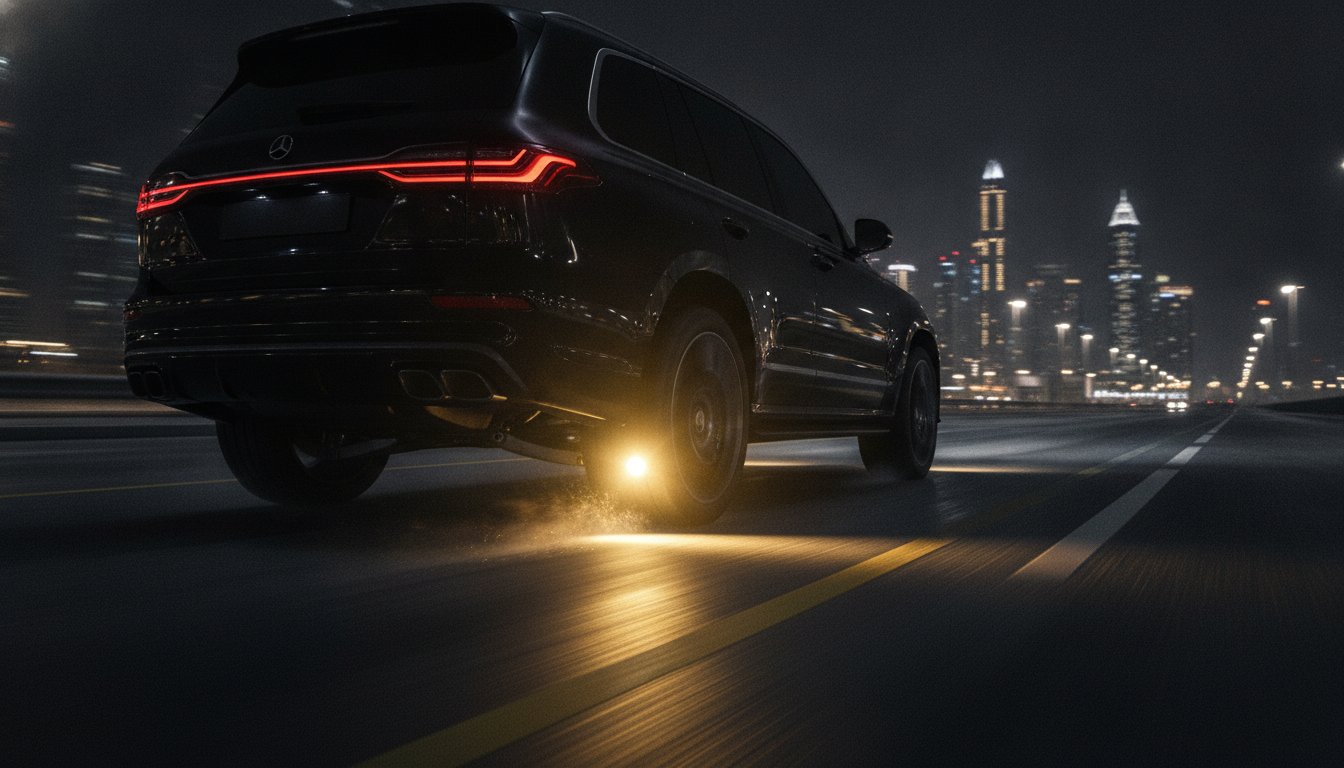
Does your luxury sedan or SUV feel more like a motorboat than a precision machine every time you pull away from a stoplight? When your vehicle’s rear end dips excessively, it isn’t just an uncomfortable sensation; it’s a direct threat to your steering precision and visibility. You might notice the nose rising so high that the road ahead momentarily disappears, or perhaps you feel a disconnected, floaty sensation that makes high-speed driving on Dubai motorways feel genuinely unsafe. Finding a reliable rear of car squatting on acceleration fix is essential to regaining control and ensuring your car handles exactly the way its engineers intended.
We understand that seeing your car sag can trigger immediate anxiety about air suspension failures or complex mechanical repairs. It’s true that worn shock absorbers, tired springs, or failing air bags are often to blame, but identifying the exact culprit is the first step toward a stress-free resolution. This guide will walk you through the primary causes of rear-end squat and show you how professional intervention can restore that like-new handling. We’ll explore the technical signs of suspension fatigue and the specialized solutions that will keep your vehicle stable, safe, and comfortable for every journey.
Key Takeaways
- Understand the physics of weight transfer and why excessive rear-end compression directly compromises your steering precision and road safety.
- Identify the primary mechanical culprits, such as worn shock absorbers or fatigued coil springs, to determine the most effective rear of car squatting on acceleration fix.
- Learn how to perform a simple “Bounce Test” and visual inspection to spot fluid leaks or perished rubber before they lead to more costly repairs.
- Discover why a professional suspension health check and the use of OEM-quality components are essential for restoring your vehicle’s original handling.
- See how Dubai’s extreme heat and sand accelerate the degradation of suspension bushings and why specialized, high-temperature resistant seals are a necessity.
What is Rear-End Squatting and Why Does it Matter?
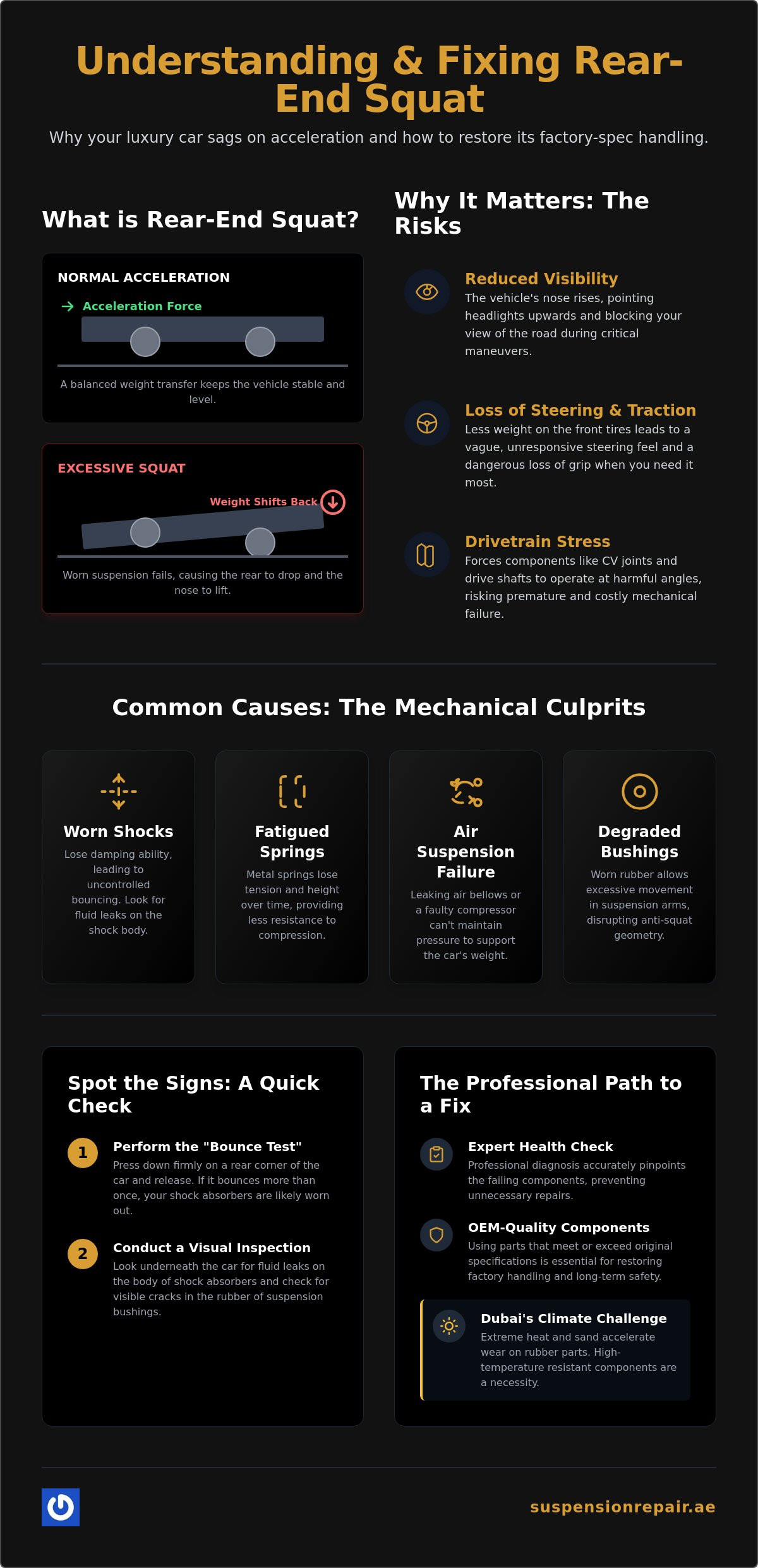
Have you ever noticed your headlights pointing at the palm trees instead of the asphalt when you merge onto the highway? This physical reaction is known as rear-end squat. It occurs as the vertical compression of your rear suspension under the force of acceleration. While every vehicle experiences some degree of longitudinal weight transfer, excessive dipping indicates that your dampers and springs are no longer managing these forces effectively. If you’re searching for a permanent rear of car squatting on acceleration fix, you must first understand the physics of why your vehicle is losing its level stance.
When you press the gas pedal, inertia resists the forward motion of the car’s body while the tires push the chassis forward. This creates a rotational force that shifts weight from the front axle to the rear. Modern Car suspension systems are engineered with “anti-squat” geometry to counteract this movement. However, when components like bushings, shocks, or air bags degrade, this geometry fails. The threshold between “normal” weight transfer and “excessive” squatting is usually defined by your ability to maintain steering control. If the front end feels light or “floaty” during a launch, your suspension has crossed into the danger zone.
The Dangers of Excessive Squatting
Why should you worry about a dipping rear end? Safety is the primary concern. As the rear compresses, the nose of the vehicle rises, significantly reducing forward visibility during critical maneuvers. This “pitching” effect also pulls weight away from the front tires. In front-wheel-drive or all-wheel-drive vehicles, this leads to a sudden loss of traction and vague steering responsiveness. Furthermore, extreme squatting angles put immense stress on rear CV joints and drive shafts. These components are forced to operate at angles they weren’t designed to handle, which can lead to premature mechanical failure and costly drivetrain repairs.
Squatting vs. Handling Performance
Don’t confuse a performance “launch” with suspension sag. While some drag racers use squat to plant the tires, a daily-driven luxury vehicle should remain relatively flat to maintain aerodynamic balance. When the nose rises too high, air rushes under the chassis, creating lift that reduces high-speed stability. This often results in a “boating” sensation that erodes driver confidence, especially during high-speed merges or lane changes. A professional rear of car squatting on acceleration fix restores the “like-new” handling that keeps your car glued to the road, ensuring that every bit of engine power is used for forward momentum rather than vertical movement.
Common Causes of Excessive Squatting on Acceleration
Why is your car suddenly sinking toward the pavement when you hit the gas? While high-performance vehicles are designed to manage weight transfer, a noticeable sag usually indicates that specific mechanical components have reached the end of their service life. In luxury daily drivers, this isn’t a design choice; it’s a symptom of fatigue. Identifying these underlying issues is the first step toward a permanent rear of car squatting on acceleration fix that restores your vehicle’s factory-spec poise.
Several components work in unison to keep your chassis level. When one fails, the entire system’s geometry is compromised. The most common culprits include:
- Worn Shock Absorbers: These lose the ability to provide rebound and compression damping, allowing the rear to “bounce” or drop rapidly.
- Fatigued Coil Springs: Over time, metal springs lose their tension and “memory,” resulting in a lower ride height and less resistance to weight shifts.
- Air Suspension Failure: Leaking air bellows or a failing compressor can prevent the system from maintaining the necessary pressure to support the car under load.
- Degraded Bushings: Perished rubber in the control arms allows for excessive “slop” or movement, which disrupts the anti-squat geometry of the suspension.
Worn Shock Absorbers and Struts
Shock absorbers act as the hydraulic “brakes” for your springs. They control the speed at which the suspension compresses and extends. When diagnosing suspension problems, specialists often look for “misting” or fluid leaks on the shock body. If the hydraulic fluid has escaped, the shock can’t resist the rapid weight transfer triggered by the engine’s torque. This is especially critical for 2026 performance cars, which produce high levels of instantaneous torque that require precision damping to manage. If you notice these symptoms, it’s best to consult a specialist before the instability affects your tires or drivetrain.
Air Suspension Leaks and Compressor Issues
Many high-end brands like Mercedes, BMW, and Range Rover utilize air suspension to provide a cloud-like ride. However, these systems are vulnerable to small leaks in the air bellows. Even a microscopic tear means the system cannot maintain the high pressure required to stay level during acceleration. You might notice the compressor running more frequently or a “suspension fault” warning light on the dashboard. In some cases, the vehicle may even enter a “limp mode,” restricting your speed to prevent damage to the undercarriage. A professional rear of car squatting on acceleration fix for air systems typically involves a diagnostic pressure test to locate the leak before the compressor burns out from overwork.
Diagnosing the Squat: Component Failure vs. Geometry
Is your car truly failing, or is it just poorly designed? Discerning the difference between a mechanical failure and a geometry limitation is essential for an effective rear of car squatting on acceleration fix. While racing enthusiasts often obsess over anti-squat percentages, luxury car owners usually face a more straightforward problem: component fatigue. You don’t need a degree in physics to spot the early warning signs of a failing rear end. Start by observing how the vehicle reacts to basic manual inputs before moving on to more technical inspections.
Try the “Bounce Test” for an immediate assessment. Walk to the rear of your vehicle and push down firmly on the trunk or bumper. Does the car return to its original height immediately and stay there? If it continues to oscillate or bounce more than once, your dampers are effectively dead. This lack of control is a primary driver of excessive squat. Next, perform a visual sweep. Look for dark, oily residue on the shock bodies. Listen for metallic clunks or rubbery squeaks as you accelerate. These noises suggest that your bushings have perished or that the internal valving of your shocks has collapsed.
Identifying Mechanical Wear
Look closely at the strut body for signs of hydraulic fluid. A “misting” of oil is a warning, but a heavy leak indicates a total failure of the internal seals. You should also check your rear tires for uneven wear patterns. If the inner edges of the tread are wearing faster than the rest, it’s a secondary symptom of suspension sag altering your camber angles. Remember that damping rate is the speed at which a shock resists movement. When this rate drops due to wear, the rear of the car sinks much faster than the chassis can compensate for, leading to that unsettling “nose-up” attitude.
This attention to mechanical detail is essential for any driver, whether you’re diagnosing your own car or choosing a reliable rental from DriveCars.ai for a trip through Morocco.
Understanding Anti-Squat Geometry
Your vehicle’s geometry is technically fixed by its design, but wear changes how that geometry performs in the real world. Anti-squat is a mathematical relationship between the swing arm pivot and the center of gravity. When your car is at its factory ride height, these angles work to push the tires into the ground and keep the body level. However, if you have modified or lowered your vehicle, you may have inadvertently compromised these anti-squat angles. Even without modifications, perishing rubber bushings allow the control arms to shift out of their intended alignment. This creates a “soft” geometry that can no longer resist the forces of high torque, making a professional rear of car squatting on acceleration fix necessary to restore the original engineering balance.
How to Fix a Squatting Rear End
How do you restore the level profile of your vehicle? Implementing a permanent rear of car squatting on acceleration fix requires a methodical approach that moves from digital diagnostics to mechanical replacement. Unlike temporary fixes or generic aftermarket parts that might ruin your ride quality, a professional restoration focuses on returning the suspension system to its original operating parameters. This process ensures that every component works in harmony to resist the forces of torque.
A comprehensive repair follows a logical sequence to ensure no underlying issues are missed:
- Step 1: Conduct a professional suspension health check and computer diagnostic to identify electronic faults or pressure drops.
- Step 2: Replace worn shock absorbers or struts with OEM-quality units to restore damping control.
- Step 3: Inspect and replace fatigued coil springs or leaking air bellows that can no longer support the vehicle’s static weight.
- Step 4: Renew control arm bushings to restore pivot point integrity and eliminate unwanted mechanical “slop.”
- Step 5: Perform a precision 3D wheel alignment to ensure your geometry is within factory specifications.
Replacing Shock Absorbers and Springs
When your dampers fail, you must replace them in pairs across the axle. Installing only one new shock creates an imbalance in damping rates, which leads to unpredictable handling during emergency maneuvers. Many owners choose this moment to upgrade to heavy-duty or performance-spec components, especially if they frequently carry heavy loads or drive aggressively. If you noticed hydraulic leaks during your inspection, seeking expert shock absorber repair Dubai is the most efficient way to ensure your new units are installed and torqued to exact manufacturer standards.
Repairing Luxury Air Suspension Systems
Luxury vehicles require a more technical approach. Specialists must distinguish between a leak in the high-pressure air lines and a failure within the air bag itself. Once the mechanical repair is complete, the work isn’t finished. You must calibrate the ride height sensors using specialized software to ensure the computer knows exactly where “level” is. Because luxury car suspension repair Dubai involves complex electronics, generic tools often fall short. Professional workshops use brand-specific interfaces to reset the system and clear any lingering fault codes. Ready to restore your car’s “like-new” poise? Schedule your suspension health check today to eliminate the squat and drive with confidence.
Specialized Suspension Repair in Dubai: Restoring Your Ride
Driving in the UAE presents a unique set of challenges that most automotive manufacturers don’t account for in their standard maintenance schedules. While a rear of car squatting on acceleration fix might be a straightforward mechanical swap in cooler climates, Dubai’s environment demands a more specialized approach. The combination of extreme ambient heat and pervasive fine sand creates a “pressure cooker” effect for your vehicle’s undercarriage. If you want a resolution that lasts longer than a single summer season, you must address the environmental factors that caused the failure in the first place.
Why do local conditions matter so much? It comes down to material science. High-performance suspension systems rely on precision-engineered rubber and hydraulic fluids to maintain ride height. In our region, these materials are pushed to their absolute limits. Choosing a specialist who uses high-temperature resistant lubricants and reinforced seals isn’t a luxury; it’s a necessity for maintaining vehicle safety on the E11.
Why Dubai Conditions Matter
When temperatures soar above 50°C, the hydraulic fluid inside your shock absorbers undergoes a physical change. The heat thins the oil, significantly reducing its viscosity and its ability to provide consistent damping. This is why you might notice your car squats more during a mid-afternoon drive than it does in the early morning. Additionally, the abrasive nature of desert sand acts like sandpaper on air suspension bellows and rubber seals, causing microscopic tears that eventually lead to total pressure loss. “In Dubai, suspension components often reach the end of their service life 30% faster than in temperate climates.” This accelerated wear makes regular inspections vital for any luxury car owner.
Choosing a Specialist Over a General Garage
High-performance German brands like Audi and Porsche utilize sophisticated electronic damping and multi-link geometries that general garages simply aren’t equipped to handle. Using non-OEM parts or generic bushings might save money today, but these components often fail to meet the strict tolerances required for high-speed stability. Consulting a German car suspension specialist Dubai ensures your vehicle receives the precision calibration it needs.
A professional rear of car squatting on acceleration fix involves more than just turning a wrench. It requires specialized diagnostic equipment to reset ride-height sensors and ensure the software communicates correctly with the hardware. Proper calibration is what makes a ride comfort restoration Dubai successful, returning that “vault-like” feel to your cabin. Finally, always insist on a professional warranty. In a climate this harsh, a guarantee on specialized suspension work is your best insurance against the elements, providing the peace of mind that your car is truly safe for the road ahead.
Restore Your Vehicle’s Precision and Poise
Don’t let a sagging rear end compromise your safety or driving pleasure. Excessive squatting is more than an aesthetic issue; it’s a clear warning of fatigued shock absorbers, leaking air bellows, or perished bushings that have been stressed by Dubai’s intense heat. Securing a professional rear of car squatting on acceleration fix is the only reliable way to regain the steering precision and high-speed stability your luxury vehicle was engineered to provide.
Our team specializes in Audi, BMW, and Porsche suspension systems, utilizing 2026 diagnostic technology to identify and resolve issues with surgical accuracy. We are located in the heart of Dubai, offering premium care and specialized expertise for high-end machinery. Why settle for a floaty, unpredictable ride when “like-new” handling is just a visit away? Book a Professional Suspension Diagnostic at Our Dubai Workshop today. Let our expert mechanics handle the technical burden while you focus on the road ahead. Your car’s performance is our priority, and we’re here to ensure your journey remains smooth and secure.
Frequently Asked Questions
Is it normal for a car to squat a little bit during acceleration?
A slight amount of rear-end dip is a normal result of longitudinal weight transfer as the vehicle moves forward. However, this movement should be controlled and immediate. If the car feels like it’s “boating” or if the front end rises high enough to obscure your view, you need a professional rear of car squatting on acceleration fix to restore stability. Healthy suspension systems are designed to counteract this force and keep the chassis relatively level.
Can worn tyres cause the rear of my car to squat?
No, worn tyres are a symptom of suspension failure rather than the cause of the squat itself. While tyres don’t influence the vertical movement of the chassis, excessive squatting often leads to uneven tread wear on the inner edges because the suspension geometry is pushed out of spec. If you notice your tyres are wearing prematurely, it’s a strong indicator that your shocks or springs are no longer supporting the vehicle’s weight correctly. For reliable advice and replacement options, Partner Tires offers a wide selection of quality rubber to ensure your vehicle remains safe while you address the underlying suspension issues.
How much does it cost to fix a squatting suspension in Dubai?
The total investment for a rear of car squatting on acceleration fix depends entirely on your vehicle’s make and the specific parts that have failed. Replacing a single pair of shock absorbers is generally a different price point than a full air suspension overhaul or a complete set of coil springs. You should seek a detailed health check at a specialized workshop to get an accurate quote tailored to your car’s luxury or performance requirements.
Will a wheel alignment fix my car from squatting?
A wheel alignment won’t fix the physical sag or squatting sensation in your vehicle. Alignment only adjusts the angles at which your tyres hit the road, whereas squatting is caused by the failure of weight-bearing components like springs or dampers. You must replace the worn parts first to restore the ride height, then perform a precision 3D alignment to ensure your new components don’t cause rapid tyre wear.
Can I drive my car if the rear suspension is sagging or squatting excessively?
You should avoid driving a vehicle with excessive suspension sag, especially at high speeds on Dubai motorways. When the rear end dips too low, you lose front-wheel traction and steering precision, which makes emergency maneuvers dangerous. Additionally, the extreme angles placed on your CV joints and drive shafts can lead to sudden mechanical failure while you’re in motion, resulting in much higher repair bills.
What happens if I ignore an air suspension leak?
Ignoring a small air leak will eventually destroy your suspension compressor. Because the system has to work constantly to maintain ride height against the leak, the compressor will eventually overheat and burn out. Replacing a compressor is significantly more expensive than replacing a single air bag or fixing a high-pressure line, so it’s best to address air system faults as soon as you notice the car sitting lower than usual.
How do I know if my shocks are dead or if it’s just a geometry issue?
Dead shocks usually fail the “bounce test” by allowing the car to oscillate several times after you push down on the bumper. Geometry issues are more likely if the car sits unevenly even when it’s parked on a flat surface. If your vehicle is stock and hasn’t been modified, the squatting is almost always caused by mechanical wear in the dampers, springs, or bushings rather than a design flaw.
Do performance cars squat more than standard sedans?
Performance cars are actually designed to squat less than standard sedans because they use stiffer anti-squat geometry to manage high levels of torque. If a high-performance vehicle is dipping significantly during a launch, it’s a sign that the suspension can no longer handle the engine’s power output. These vehicles require precision-tuned dampers to keep the chassis flat and maintain maximum traction for the rear wheels.